Follow us on Facebook @FHofDW
Out of the Shadows:
Hidden Women of Deal & Walmer
a brief summary of some women’s stories and experiences
~~~~
Centuries-old male dominance of history has meant that women’s stories have been disregarded and ignored.
They have been ‘hidden in the shadows’ of their male relatives and counterparts.
We want to find the ‘hidden stories’ of women from Deal & Walmer, no matter how small, and bring them out of the shadows.

Follow us on Facebook @FHofDW
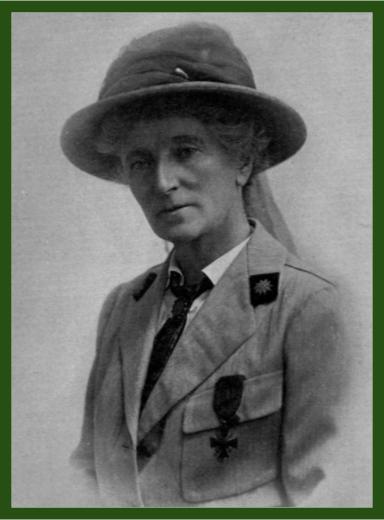
Katherine Harley nee French
1855 – 1917
Katherine Mary Harley was born in Ripple the daughter of Naval Captain John Tracey French and Margaret Eccles. In 1877 she married Colonel George Ernest Harley of The Buffs. Both she and her sister, Charlotte Despard were deeply involved with the women’s suffrage movement.
Encouraged by a women’s suffrage walk from Edinburgh to London made by a small group of women, Katherine, in 1913, proposed and helped organise the Pilgrimage march. An estimated 50,000 suffragists from right across the country walked to London. On the whole this was a peaceful march but some groups of women were subjected to verbal abuse or had things thrown at them just because they wanted the right to vote.
A march from Jarrow to London in 1936 is perhaps more well known. It was an organised march made by just 200 specially selected men to highlight the state of unemployment in the town of Jarrow.They were given a broad public welcome on arrival in London.
Katherine’s WW1 service led her to nursing in France and Salonika for which she was awarded the Croix de Guerre.In 1916, she joined an independent ambulance unit serving the civilian population of an Allied-occupied town in Serbia. As a frontline town, it was subjected to a daily bombardment. Katherine, though, was determined to help the women, children, and elderly. She also rented a house in the town and set up an orphanage.
Apparently while taking tea, Katherine was killed by shellfire in March 1917. She was buried with full military honours. At home in England other fitting memorials were made in her name.
She has several other memorials ~
In the parish church of Condover, Shropshire, is a plaque in memory of her husband and herself.
Follow us on Facebook @FHofDW
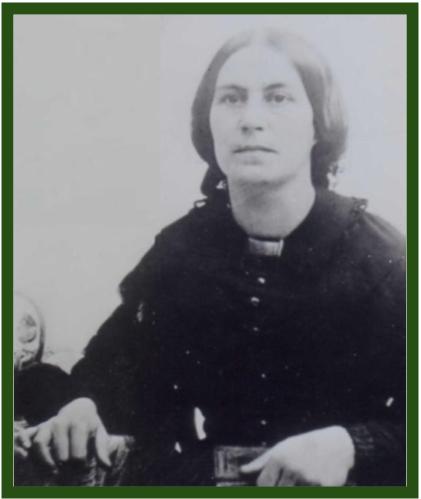
Jane Hayward nee Hammond
1822 – 1901
Jane was born in Deal the daughter of Richard Resker Hammond and his wife Elizabeth Ann Jordan. In May 1844 she married Henry Woodland Hayward, a stationer, bookseller and piano tuner. Jane gave birth to twelve children including two sets of twins. In December 1863, just eight weeks after having her last child, Henry walked out of their home and disappeared!
Despite attempts to find him, including advertising in the local and national press, for nearly a year nothing was heard of him until at some point in late 1865 he made contact with a story of amnesia and of finding himself in Melbourne!
In May 1866 Jane and the nine youngest children took passage to Australia, travelling in Steerage on Glendower, a small sailing ship.
Steerage was a low-ceilinged space under the deck with rows of wooden bunks and central tables. With 23 adults and 15 children under 10 this would have been a cramped journey. Water would have been limited, and meals that were made from dried or pickled food would have been at first unpalatable for Jane and her children. If a storm hit, it would have left them below decks, in darkness, with the ship rolling about in heavy seas. Perhaps they were lucky as many sailing and steam ships carried several hundred steerage passengers.
Her troubles in Australia were not over. Henry’s chosen occupation of a singing teacher brought in a small income and by 1878 he was bankrupt. In 1879 they took on a small hotel which is where Henry died in 1880 of kidney and heart disease. Jane outlived her husband by twenty years and through her, the family remained close. She moved back to Melbourne to be near them and is buried there, surrounded now, by some of her children and grandchildren.
Follow us on Facebook @FHofDW
Mary Jane Orrick
1847 –
Mary Jane was born in Deal in 1847 the daughter of boatman Thomas Orrick and his wife Mary Bowman who died in 1854.
Aged ten Mary Jane appeared in court charged with stealing a ladies petticoat, children’s clothing, food and some money. She later took the bundle of clothes to Wellden’s* pawnbrokers with a note from her father asking for a loan against them. She was then arrested. As her father was at sea the case was adjourned. On his return he admitted writing the note but knew nothing about the contents of the bundle. On this occasion father and daughter were let off with a caution.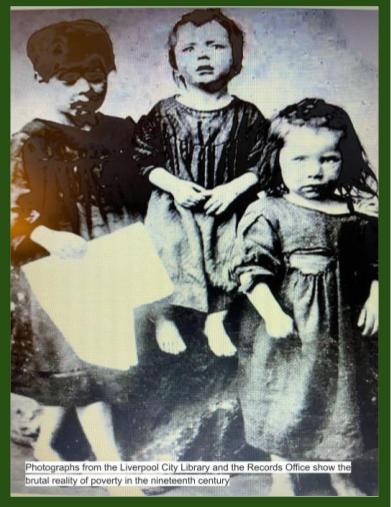
Left alone again, Mary Jane with her two younger sisters, aged just five and seven, were caught and charged with stealing more clothing. It was reported that they “…were almost in a state of near nudity without shoes, stockings or bonnets….” Until their father’s return the girls were sent to the Eastry Union.
When the girls were caught stealing food the magistrate asked Thomas if he would be “…bound for their good behaviour for twenty-one days…” he declined ”…as his occupation called him away to sea….” His daughters received six weeks in Sandwich Gaol, with hard labour.
And so it went on.
In 1861 Mary Jane was caught with a stolen cape. It appears she and her sisters were sleeping rough and using stolen umbrellas as a makeshift shelter. For this it was six weeks in Dover Gaol followed by five years in a Reformatory.
Soon after her release Mary Jane was detained for stealing 3s. 6d. from a man who she’d invited back to her lodgings; this case was dismissed. She was next, arrested for not having attended a medical examination under the Contagious Diseases Acts*. It seems that Mary Jane had moved from stealing from others, to feed and clothe herself, to selling herself instead.
By 1873 her sisters had married and moved to Hampshire. Mary Jane soon followed, and it is here that she appears in court at least three more times. After being convicted for riotous and violent behaviour she totally disappears from the records.
Follow us on Facebook @FHofDW
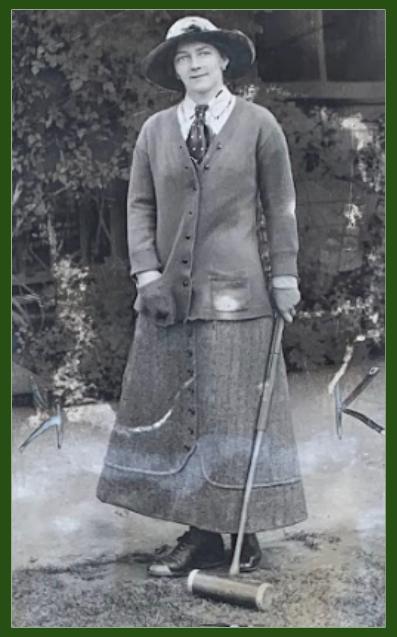
Evelyn Wilks nee Quill
1887 – 1933
Evelyn was the daughter of Lieutenant Colonel John Jerome Quill of the Royal Marines and his wife Maud Simpson.
Evelyn was a fun-loving girl who played tennis and excelled at Croquet competing up and down the country and in several National Ladies Championships. She enjoyed winter holidays with friends in St Moritz and indulged in a cruise to the West Indies.
As a talented amateur actress she was a leading light of the Royal Marines Globe Theatre in the early 20th century. A review in ‘The Gentlewoman’ in 1907 informs us throughout a run of ‘Pinero’s The Magistrate’ the theatre was , ‘Crowded each night when most of the leading families of Walmer and the Neighbourhood were present.’ In that particular production ‘Miss Evelyn Quill undertook her small part with great appreciation.’
In 1908 Evelyn was taken by her mother to Buckingham Palace and presented to the King and Queen, her official ‘coming out.’
During the first world war Evelyn joined her mother supporting the Red Cross including at the Canadian War Hospital in Walmer.
In 1931 Evelyn married a local, wealthy, Land Agent John Wilks of Manor House, Deal. In 1933 Evelyn and John sailed across to Calais in their yacht where, during the visit, Evelyn tripped over a tram line cutting her knee. They returned the next day to Deal where she received treatment for the wound and was admitted to Deal Memorial Hospital with breathing problems where she later tragically died of sepsis.
Follow us on Facebook @FHofDW
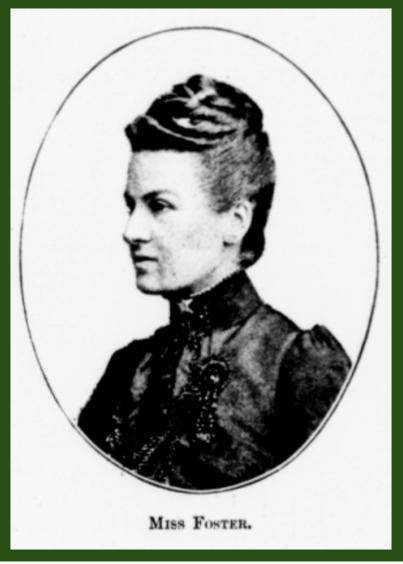
Mary Amelia MacPherson, nee Foster
1859-1940
Born in Deal, the daughter of sailor and Pilot Henry Foster and Mary Harvey Clark. Mary Amelia Foster was a teacher and at twenty-two, was running her own school in Dover. At the age of thirty, she gained a scholarship at Bedford College, London, from where she graduated with a BA in 1892, something that, just twelve years earlier, simply because she was a woman, would have been unheard of.
Moving to Leeds, Mary became actively involved in socialism and the trade unions. In mid 1896 her report on the International Workers Congress showed that the Congress had declared that women workers should be treated on equal terms with men.
After marrying journalist and trade union activist Fenton MacPherson in late 1896, they moved to Paris where Fenton was asked to organise a meeting with the popular trade unionist Tom Mann and French Trade Union officials. This led to him being expelled from France. It was Mary who enabled the meeting to go ahead. She accompanied Tom Mann and acted as his translator before he too was expelled!
Later, Mary sat on the same platform as the women’s suffrage leaders, Mrs Charlotte Despard, who spent her early years growing up in Ripple, and Mrs Emmeline Pankhurst during the celebratory meeting held for Keir Hardie, the founder of the Labour Party.
Follow us on Facebook @FHofDW
Maria Tringrove nee Marsh
1821-1882
Maria Tringrove was born in Deal in 1821 the daughter of mariner George Marsh, and his wife Mary Moon.
Maria became well known to the constabulary of Deal, the south coast and in the west country. Described as a ‘miserable looking woman,’ an ‘obstinate Woman’ and ‘extremely violent’ she was perpetually homeless, had lost two husbands and one of her eyes! She begged, probably stole and, even sold herself to feed what we today would call, her alcoholism.
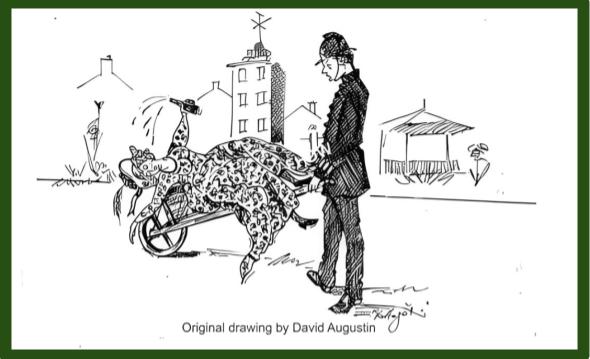
One time after being arrested in Deal’s Admiral Keppel she was so drunk it took two policemen to control her and, as she was so inebriated, she was carted off to the Police Station in a wheelbarrow.
In 1844 Maria married mariner John Blissenden. They moved to London when John found work in the docks. Shortly after the birth of their son, Henry in 1845, John disappears. By 1851 Maria had married Cornishman Richard Tringrove. Deserted by him she finds herself in Wapping Workhouse. Ten year old Henry is in an ‘establishment,’ this was possibly a Nautical Training Ship as he later joins the Royal Navy.
Back in Deal, in 1863, Maria is in Sandwich Gaol for being drunk and disorderly, using abusive language and threatening to break windows. From this point on Maria is regularly arrested for drunken, violent and riotous behaviour; breaking windows became her speciality. She travelled into Sussex and as far as Cornwall with regular spells in workhouses where refusing to work led to prison.
Refusing to wash socks in the laundry of a Sussex workhouse she received seven days in prison with hard labour; for breaking windows of a Cornish Workhouse she was sent to Bodmin Gaol where she picked oakum; and so her life went on until in 1882 sixty-one year old Maria was in the Poplar’s Sick Asylum where she died alone of Chronic Bronchitis.