Joseph Daniels Browning
5 Lower Street
17 Lower Street
4 Gracechurch Street
2 Pollington Villas, Mornington Crescent, Holloway
Fisherman’s Cottage, St. Aubin’s Road, Jersey
Occupation: Grocer
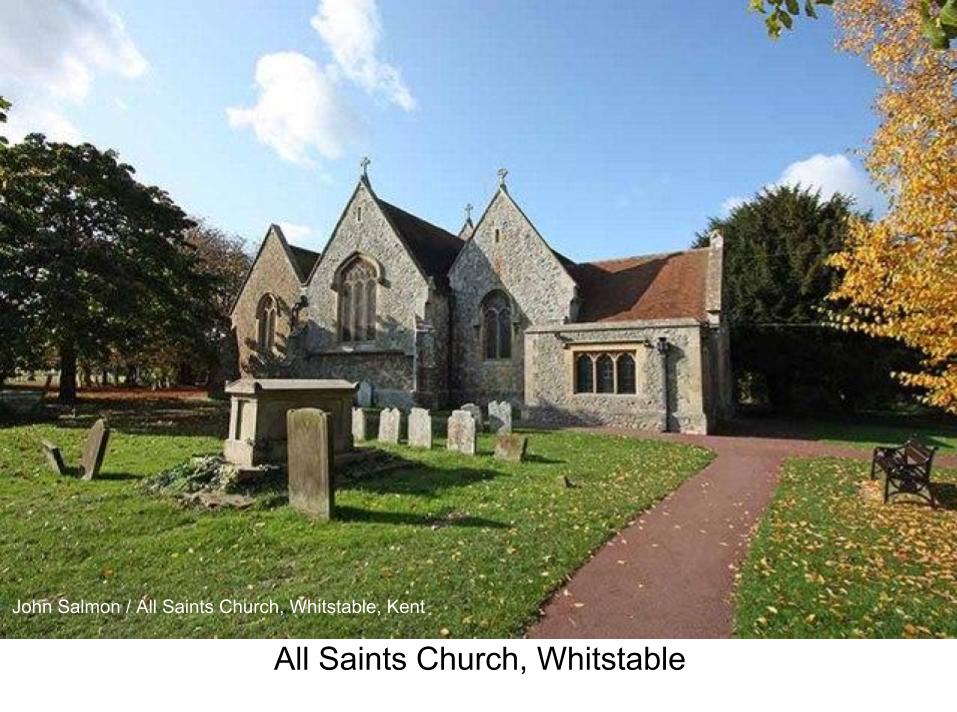
Joseph, the son of Matthew Browning and Ann Daniels, was baptised in St. Alphege’s in Seasalter near Whitstable. In 1827 he married widow Mary Ann Annall in Whitstable’s at All Saint’s Church.
Mary Ann and her first husband, Thomas Cavell Annall, were both from Deal and had married there in June 1822. Thomas, who was a printer, sadly died six months later. He was never to meet his daughter, Mary Ann Cavell Annall, who was born in their Lower Street home in April 1823. Whether she lived with Mary Ann and Joseph after their marriage is unknown as she does not appear with them on the 1841 census. However, when she married in 1848, it was from Lower Street and Joseph and her half-sister, Ellen, were witnesses to the marriage.
It is usually in the bride’s parish that a couple marry but when Mary Ann married Joseph in Whistable their marriage record actually states that she was ‘of Deal.’ Why they chose to marry in Whitstable or even how they met we just don’t know. However, they must have moved into 5 Lower Street, Deal, soon after they married as this is where Ellen, their first child, was born in 1828. Four more children were to follow before they moved up the road to number 17 Lower Street.
London
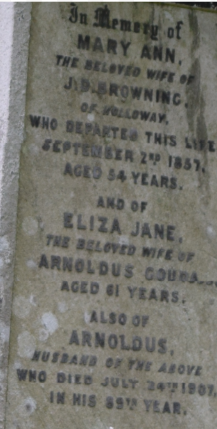 By 1850 the family are in London where Joseph pays 46s and 8d to become a member of the Company of Loriners so becoming a Freeman of London. Being a Freeman enabled him to continue in his trade as a grocer and tea dealer. The Freedom admissions papers show that his address was then 4 Gracechurch Street where he and his family lived until around 1857 when they moved to 2 Pollington Villas, Mornington Crescent in Holloway. Mary Ann sadly died there in September of that year.
Mary Ann suffered from Ramollissement, a term used to describe a brain injury or stroke, which caused her to suffer paralysis for eight weeks before her death. It is unlikely then that she was able to attend the marriage of her youngest daughter Eliza in July that year. She is buried in Highgate Cemetery with Eliza and her husband Arnoldus Gouda.
Jersey
It seems likely a lady named Elizabeth Chambers lived near the Brownings, though we’ve not been able to find any definitive records about her living in the area prior to 1852 when her first son, Algernon Philip, was born and baptised. She may have been a customer of Joseph’s and or a friend of Mary Ann’s; a relationship of some kind certainly existed as it was to Elizabeth that Joseph married in 1858. But not as you might expect, in London. They married in St. Helier’s Church, on Jersey.
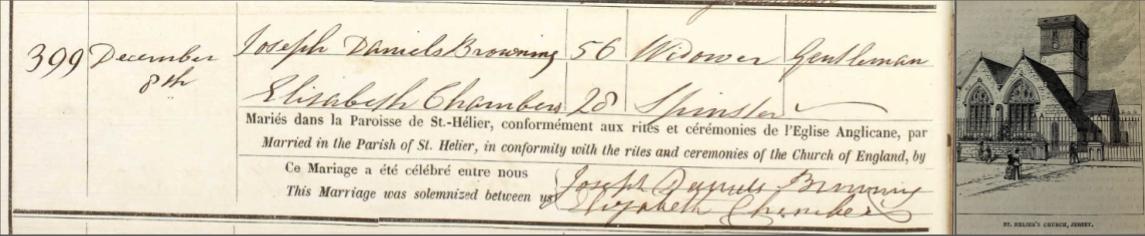
When they married Elizabeth said she was a spinster but the 1861 census for Jersey states she had three children by a first marriage and one child, Joseph Herbert, by her second! Now initially we couldn’t find a record of this ‘first marriage’ or any birth or baptism records for these ‘Chambers’ children but further research proved the children to be illegitimate and turned up a tale of violence, adultery and bigamy.
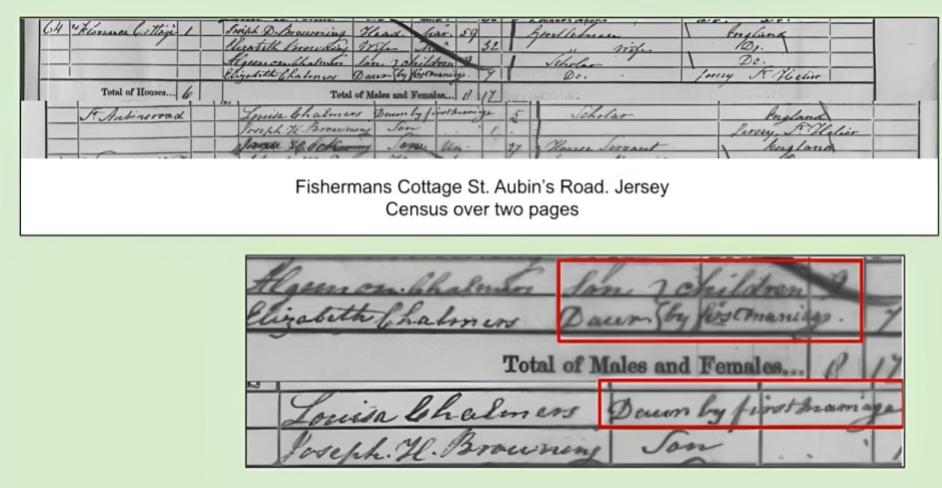
1861 Census Jersey
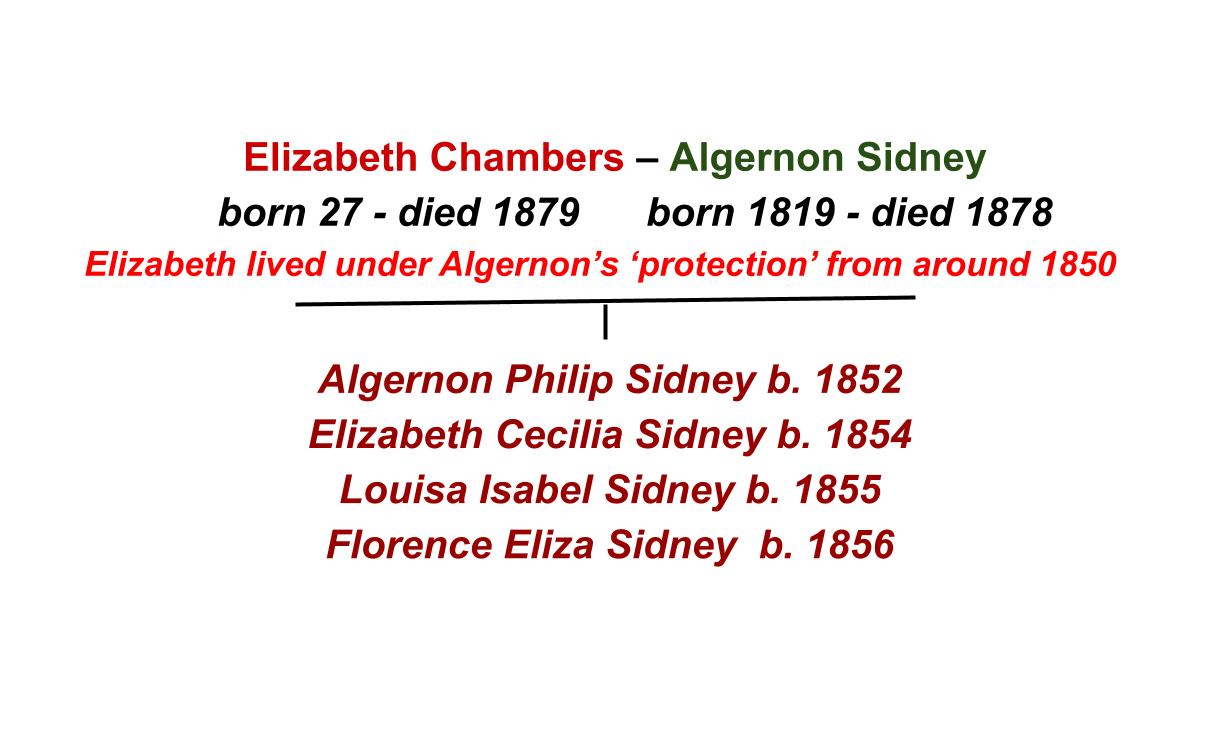
It appears that Elizabeth had been under the ‘protection’ of a solicitor named Algernon Sidney. In other words she was his mistress.
Elizabeth was the daughter of a Royal Artillery Sergeant, Walter Chambers and Isabel nee Baird She was born in Woolwich in 1827 and baptised there in the Scotch Church.
How she met Algernon is not known but by the mid 1850s she had had four children by him, Algernon Philip Sidney b. 1852, Elizabeth Cecilia Sidney b. 1854, Louisa Isabel Sidney b. 1855 and Florence Eliza Sidney b. 1856, who were all baptised and registered as if their parents were married.
Bigamy
At some point there was a breakdown in the relationship and Algernon took two of her children away from her and she decided that she no longer liked or wanted the life she and her children were leading. So, when a proposal of marriage was made by a man who had promised to care for her and her children presented itself. She took it. This is where the bigamy comes in as, Captain Albert Adolphus Montrose, alias Albert Adolphus Armstrong was already married!
Elizabeth, we are told, met Albert whilst out walking and a friendship grew. She told him about her children and her troubled relationship with Algernon and that he had taken the two of the children away from her. Albert promised to help her get them back he even went with her to the court of the Queen’s Bench, which at the time handled child custody cases. Going to the Queen’s Bench, and the apparent subsequent return of her children, suggests that Algernon was ordered to return the children to their mother or may the threat of a court appearance was enough. Whatever the case the children were returned and an agreement seems to have been made to support them.
Elizabeth married Albert in July 1857, when Algernon was out of the country. Rather strangely the following month, Louisa, Elizabeth,and Florence, were all baptised in St. Mary’s Church, Islington. Algernon Philip, their brother, had been baptised soon after his birth in 1852. If Algernon attended any of these baptisms we don’t know. Sadly a month after her baptism, Florence, the youngest, died.
By November 1857 Elizabeth somehow found out that she had made a bad choice and that her new husband was a bigamist.
Perhaps this information came from Algernon, as in court Elizabeth stated “…Mr. Sidney called on me yesterday, and he was there the day before, he has been there very frequently on this business…” Wherever the realisation came from Elizabeth decided to report Albert to the Police.
During the resulting trial it was revealed he had made her promise to keep their marriage a secret, giving the reason that if he remained single, he would, in a few years time, inherit £3,000 a year. It was also revealed that he had tried to seduce and promised marriage to several other ladies as well.
Albert was found guilty and sentenced to nine months imprisonment with hard labour and Elizabeth’s marriage was no more.
After this, the relationship between her and Algernon deteriorated even further, probably because, and embarrassingly for him, he had been named in court as Elizabeth’s ‘protector’. Which was then reported in the papers!
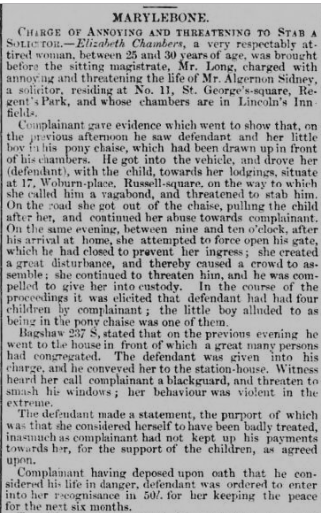
Morning Advertiser – Monday 01 February 1858
Then in January 1858, Elizabeth caused a massive scene outside Algernon’s home. He apparently had not kept up his payments for the children, so she decided to discuss this with him. Matters got out of hand and she ended up verbally abusing and even threatening to stab him. The Police were called and Elizabeth was bound over to keep the peace.
Joseph Browning now re-enters the story. Whether Elizabeth turned to him for help to escape Algernon we simply don’t know. It is quite possible that Algernon helped them move to Jersey, thus distancing himself from Elizabeth and further scandal.
He may have had a home on the island or Elizabeth had family there as this is where two of his and Elizabeth’s daughters were born. It is also where Walter, Elizabeth’s father died in 1858 Whatever the reason for moving to Jersey, Joseph & Elizabeth stayed there for about 8 years. And it is where their son Joseph Herbert Browning was born in 1859.
Now, let us turn to Algernon Sidney, Elizabeth’s so-called protector. While in a relationship with Elizabeth he married a lady, who was coincidentally named Elizabeth Ann Sidney in September 1851, who was the daughter of an attorney of law the Honourable John Apsley Sidney.
This was far from a happy marriage. When Ann filed for divorce in March 1864 the records show that she accused Algernon of adultery and not just with beating and abusing her but also in trying to kill her.
Rape was not illegal between husband and wife until 1991 so it is not mentioned but, reading between the lines, you could come to that conclusion.
According to the Divorce Petition Algernon started to attack his wife soon after their marriage and Elizabeth Ann listed a total of 12 acts of physical cruelty against her which included striking her without provocation; attempting to strangle her; dragging her from bed by her hair swearing at her and then locking her in a cold room; entering rooms, then locking the door behind him and abusing her; while undressing for bed one night he, in a fit of passion, threw her on the bed, beat her then put a pillow over her face nearly suffocating her. He regularly beat, and abused her in front of the servants and even her mother. On one such occasion a servant called the police which resulted in Algernon being bound over to keep the peace after Ann took out a summons against him. These acts of violence and threats were all dated and documented, so Ann probably kept a diary.
In the divorce petition she specifically names two women as Algernon’s mistresses and as mothers to his children.They were Elizabeth Chambers, and another woman whose name was assumed to be Seymour. In particular, she says that Elizabeth Chambers was openly living as Algernon’s wife.
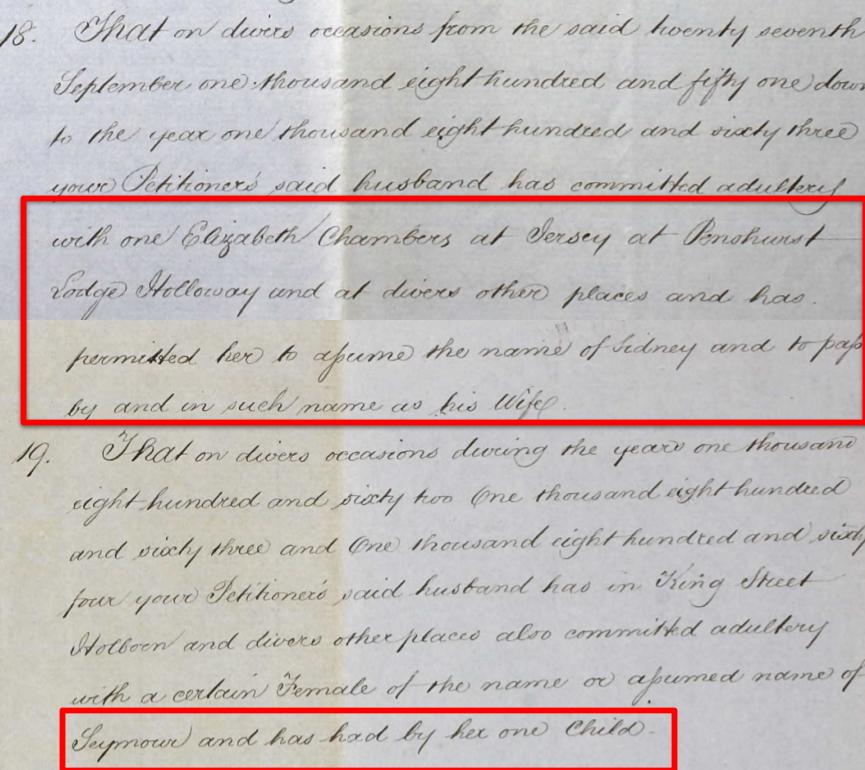
The Divorce was granted in 1865 and, despite Algernon’s protestations and attempts not to pay, alimony was awarded with the provision that she remains chaste and did not remarry. Elizabeth Ann does remarry. In December 1870 she married Reverend George MacDonnell whose own divorce had been granted the previous month. He’d divorced his wife on the grounds of her committing adultery.
Joseph and Elizabeth
Let us return to Joseph and Elizabeth who had returned to England, as previously said in around 1865, which is when we know the family were in Whitstable as five year old Joseph Herbert was baptised there on October 2nd, intriguingly as Joseph Herbert Sidney Browning. It is also where, just twelve days later on the 14th October, his father, Joseph Browning died, of heart and liver failure.
We couldn’t find a birth record, online, for Joseph Herbert so we don’t know if he was actually given the name ‘Sidney’ at birth. The Jersey newspaper suggests not. But it is the name he continued to use. Even giving it to his own children, suggesting that he perhaps maintained and had a good relationship with the Sidney family.
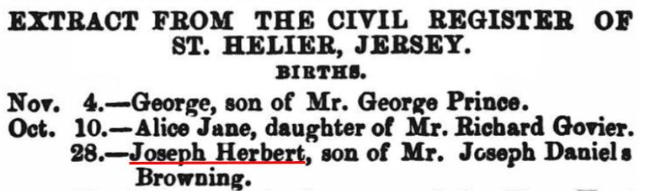
Jersey Independent 10 November 1859
By 1871 Elizabeth had returned to London with Joseph Herbert. Her eldest two children, Algernon Philip and Elizabeth Cecilia were then living with their father and his second wife and their young family. We’re not sure where Louisa was at this time.
Algernon had married Emily Stribling, the daughter of Pilot John Stribling, in 1867, but, by then, she had already given him two daughters, who were also registered and baptised as if their parents were married. The first, Mary Ann, was born in August 1863, when Emily was just 17 years old and Algernon was 44.
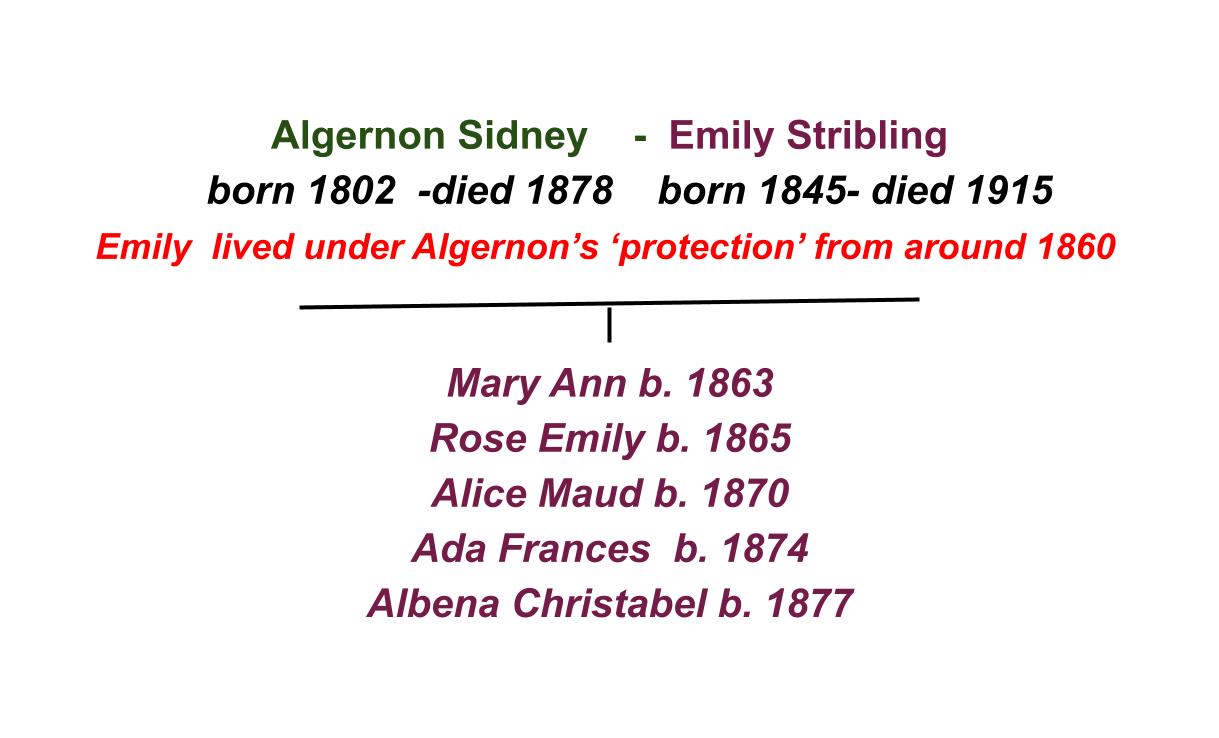
We couldn’t find any other children, registered, born and baptised, to Algernon other than those born to Elizabeth and Emily so it seems likely that Emily was the mistress named Seymour in the Divorce Petition? It doesn’t mean though that Algernon did not have other ‘women under his protection’!
Algernon and Joseph’s wills made for interesting reading as when Joseph died, in 1865, he stated that after Elizabeth’s death the remaining estate should be equally divided between ALL her children and surprisingly Algernon was named, with Elizabeth, as executor to his will.
When Algernon died of cancer in 1878 he left a large will that bequeathed money, land and property to Emily and ALL his children. He even left £50 to Elizabeth who died, intestate, of tuberculosis in May 1879.
| Name | Born | Baptised | Married | Died | Buried |
| Joseph Daniels Browning | 1802 Seasalter, Whitstable |
25 April 1802 St. Alphege Church, Seasalter |
1)Mary Ann Annall (widow) nee Cornwell 27 April 1827 All Saints, Whitstable Born 1802 Died 1857 2)Elizabeth Chambers |
1865 Blean District, Whitstable |
The Children ofJoseph Daniels Browning & Mary Ann Annall
| Name | Born | Baptised | Married | Died | Buried |
| Ellen | 1828 | 5 Mar 1828 St. George's |
Robert Lovell Evans 9 July 1851 Saint Peter Cornhill, City of London, |
||
| Agnes Jane | 1830 | 28 July 1830 St. George's |
Henry Thomas Hennett 13 Jan 1853 St Mary, Newington, Southwark, England |
||
| James Matthew | 1834 | 29 January 1834 St. George's |
Eliza Ann Wraight Canterbury 1862 |
1893 High Street, Deal |
9 February 1893 St Andrews |
| Eliza Jane | 1837 | 1 September 1837 St. George's |
Arnoldus Gouda 7 July 1857 St John, Upper Holloway, Islington, |
1899 Edmonton | 1899 Highgate Cemetery |
| Charles | 1840 | 24 July 1840 St. George's |
Winifred Spencely 1869 Whitstable |
1920 Whitstable |
The Children ofJoseph Daniels Browning & Elizabeth Chambers
| Name | Born | Baptised | Married | Died | Buried |
| Joseph Herbert | 1859 St. Helier Jersey |
28 October 1859 St. Helier Church, Jersey |
Jane Rowntree 1888 Tyne mouth Northumberland |
1928 Northumberland |
Census
| Year | Address | Name | Relationship | Occupation |
| 1841 | Lower Street | Joseph | Head | Grocer |
| Mary | Wife | |||
| Ellen | Daughter | |||
| Agnes | Daughter | |||
| James | ||||
| Eliza | Daughter | |||
| Charles | ||||
| William | Grocers Assistant | |||
| Amelia Grig |
Census
| Year | Address | Name | Relationship | Occupation |
| 1851 | Mornington Crescent, Saint Pancras, London | Joseph | Head | Tea Dealer |
| Mary Ann | Wife | |||
| Charles | Son |
Census
| Year | Address | Name | Relationship | Occupation |
| 1861 | Florence Cottage, St Helier, Jersey | Joseph | Head | Gentleman |
| Elizabeth | Wife | Gentleman's Wife | ||
| Algernon Chambers | Son of first marriage | Scholar | ||
| Elizabeth Chambers | Daughter of first marriage | Scholar | ||
| Louisa Chambers | Daughter of first marriage | Scholar | ||
| Joseph H Browning | Son | |||
| Jane Cock | Servant | House Servant |
Trade and Street Directory
| Directory and Year | Trade or Occupation | Address |
| Pigots 1840 | Grocer | 5 Lower Street |
| Bagshaws 1847 | Grocer | 17 Lower Street |