Follow us on Facebook @FHofDW
The Origins of the Deal & Downs Regatta
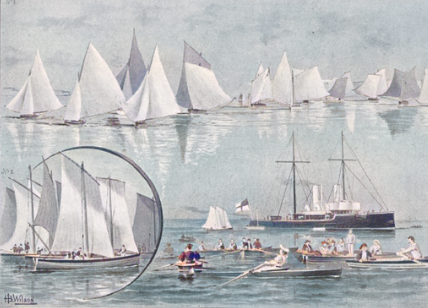
Illustrated Sporting and Dramatic News – Saturday 31 August 1895 (colourised)
On August 10 1826 Deal held its first Regatta. But what were its origins?
Deal, and the surrounding area, had profited from the wars with France. Shipping in the Downs provided employment for the boatmen, rope and sail-makers as well for those working in the town’s dock-yard. Bakers, brewers, tailors, shoemakers, not to mention public houses, were amongst the many businesses that also profited from the thousands of military and naval men passing through the town. Following the Battle of Waterloo the passage of men stopped. Businesses folded, and many townsfolk became impoverished. When William Cobbett passed through the town in 1823 he wrote his now famous, though often misinterpreted, comment that
“Deal is a most villainous place. It is full of filthy looking people. Great desolation of abomination has been going on here…”
His description clearly reflects the dire situation he found the town and its people to be in.
The businessmen and gentry of Deal knew something needed to be done, not just to bring people and therefore money into the town, but also to lift the spirits of the townsfolk.
During a meeting and dinner held at The Three Kings Hotel (now The Royal) in April 1826, Brewer and Shipping Agent, Edward Iggulden, announced himself to be “…The Representative of the Boatmen of Deal…” and went on to recommend the suggestion of a Mr Grice, for a subscription for a Rowing Match, held over six miles, to be held in the Downs for the Boatmen with the prize of a 36 ft Galley.
And so The Deal & Downs Regatta was born; the first ever to be held on the South Coast. Edward was elected treasurer and to fund the organising of the race as well as the prize money, arrangements were made for subscriptions to be collected in Deal, Sandwich, Ramsgate, Margate and Canterbury.
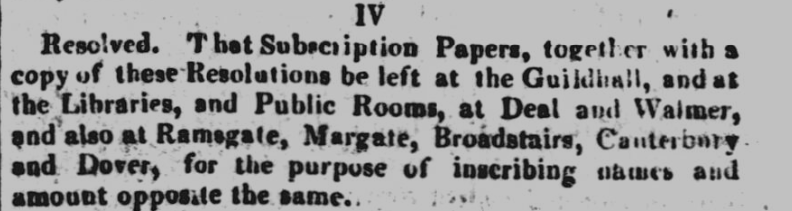
Kentish Weekly Post or Canterbury Journal – Tuesday 18 July 1826
A plan was made showing the course of the race and, instead of a galley as a prize, there were two prizes for each race with purses of newly minted sovereigns and half-sovereigns and silver coins for the losing boats. To round the day off, for those who could afford it at least, a Deal Regatta Ball was held at the Assembly Rooms, on the corner of Duke Street.
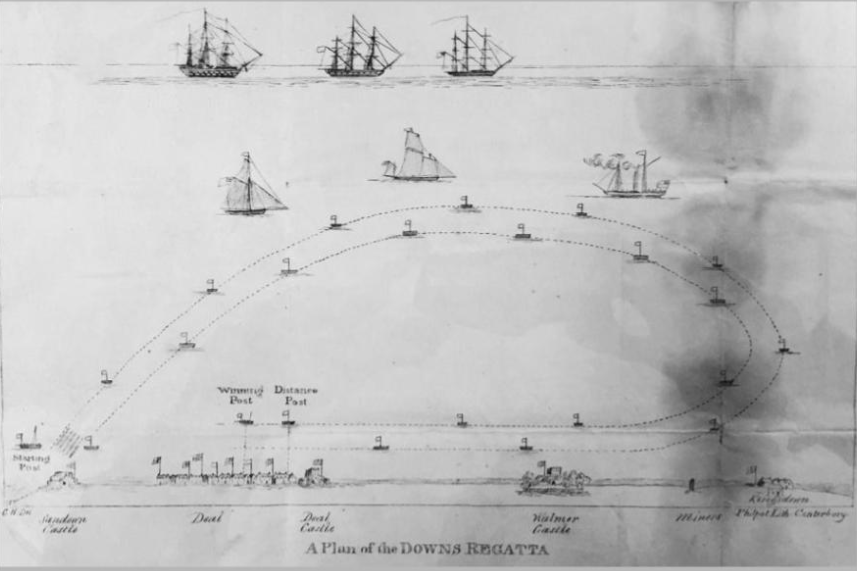
With luggers and galleys from along the South Coast competing in rowing races, and yachts coming from as far afield as Cowes on the Isle of Wight to take part in the sailing contests, the event proved to be a great success. According to the Kentish Weekly Post, it brought 10,000 people into the town, with 300 coming from Canterbury alone! Considering this was before the arrival of rail travel, this was, if true, no mean feat.
Two hundred years later, it is still an annual event organised and supported by local people and attracting many visitors to the town.