Follow us on Facebook @FHofDW
Henry Foster
Reminicenses of a Sailors Life
Part 4
Phoebe Island
The voyage from the Marquesas was pretty uneventful, landing occasionally to find water, eggs and fish. Proceeding westward to the Kingsmills, where Henry writes that they “…failed to find Phoebe Island laid in the chart in 176° E and 1° North Latitude.” They continued to search for the island and eventually found it, recording the correct co-ordinates in the ship’s log. Years later, Henry viewed a newly printed chart with the Phoebe Islands still on its old co-ordinates. He then felt it his duty to have them corrected and duly wrote to the Admiralty.
“ I, Henry Foster, Chief Mate of the Jamaica, do certify that I have cruised for several months together, in the years 1842-4, among the islands known as the Kingsmill Group, situated in about long. 175′ E., and lat. 1’30’ to 2’30’ S, and, during that time, had opportunities of correcting the places of several of the islands of that group; and do also state that the island called Phoebe Island, which is laid down in long. 176′ E. and lat. 0’12’ N., is not in east longitude at all, but lies in 176″ West., for in the vessel to which I then belonged (the barque Sussex, of London, whaler, Captain George Hammer,) we shaped our course from Byron Island some twenty or more different times and always failed in our attempts to discover the island which would be impossible if the island was laid down correctly on the charts… I have no doubt but that this statement would have been made before had not both Captain and Chief Mate died shortly after our return to England; I was then an apprentice. — Henry Foster” Today Phoebe Island is known as Baker Island and once known as New Nantucket.
Strong Island (now Kosrai)
Continuing westward, they made their way once again to the Kingsmills, passing Ocean Island, Pleasant Island (now Nauru), through the Henderson Archipelago (now Pitcairn Islands), on to the Tuamotu Archipelago, arriving at Strong Island (now Kosrae), which Henry describes as having a “…magnificent harbour surrounded by coral reefs…”. It did, though, have a narrow passage through which they managed to pass with the aid of boats from American and Canadian whalers already anchored in the harbour.
John N. Appleton, second mate of the Waverly (see below), in around 1837 also wrote about the island’s
“…immense amphitheatre the beauty of which I cannot nor shall attempt to describe…”
“…Mountains crowned with verdure, beautiful forests abounding in variegated foliage. Clumps of Cocoa Nut and Palm trees…clear lands abounding with Bread fruit and Ance Guava trees… plantain and bananas, the Mountain Stream leaping in beautiful cascades from the hills all formed a scene of enchantment and delight… the harbor surrounded by Canoes hollowed out of the trunk of a tree and many of them fantastically carved, loaded with the beautiful delicious fruits of the tropics. the tall well formed nearly naked Natives ornamented with flowers of sweetness and beauty…”
The ruler of the island was Awane Lepalik, who was also known as King George, and while on Strong Island, Henry visited his palace, which was a large hut built of poles and roofed over with matting, where he saw how the islanders made their version of kava. Here, they pounded it between two stones “…instead of chewing it as they do at Samoa, which made it more acceptable to drink…” He describes how they cooked fish and yams underground, a style of cooking that prevailed throughout the South Sea islands. In the first place, he says:
“…a hole is made in the ground large enough to contain a pig or anything else they may want to cook. This hole is then lined with stones and a fire lighted in it, and kept burning until the stones are rendered very hot. The embers are then removed, and the oven is ready. If a pig is about to be cooked, they remove the entrails and the whole of the inside, and then fill the body with very hot stones, each of which is wrapped up in breadfruit leaves. The body itself is then wrapped in leaves, and placed in the oven, belly downwards, upon some small branches of the breadfruit tree to prevent it [from] coming in contact with the hot stones at bottom of the oven. More branches are then placed over the pig and then a pile of breadfruit and banana leaves, and over that again, a mound of earth is raised to prevent all steam from escaping. In this way a pig may be beautifully cooked in half an hour…”
According to King George, the ship that first introduced pigs to Strong Island was the British merchant ship Seringapatam that had visited the island in around 1840.
Henry describes the natives here as speaking unaccountably good English, as “… cunning and loquacious and very immoral…” who respected if not feared their ruler of whom the islanders paid great homage to “…always falling on their knees and covering their faces with their hands whenever he approached them, and remaining in that position until he was out of sight…”
The Harriet
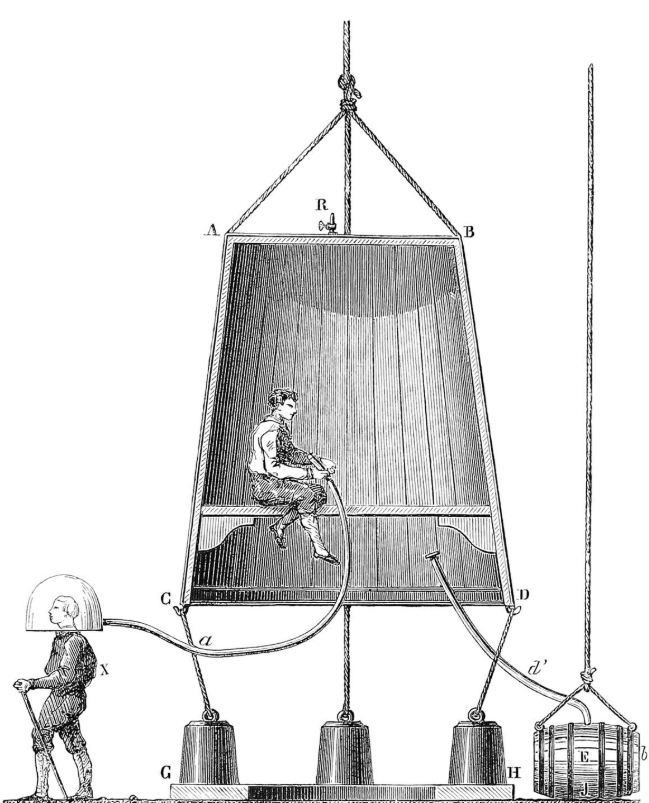 While socialising with Captain Round, of the Canadian whaler Pacific of St. John, Captain Hammer learnt of how the harbour, just the year before in 1842, had been the scene of a massacre. Captain Round explained that before entering the harbour he had taken on board natives to act as interpreters and to help buy provisions. One of them said to him: “Cap’n, why you waste so much time looking for whales, when here big ship full of it” (oil)?” He then told of how the whaler ship Harriet had arrived in the harbour to take on wood and water. That, not being suspicious of the natives, nearly all hands went ashore looking for animals to shoot for meat, leaving behind one boat’s crew on board the ship. The islanders first surrounded and killed all those on shore, and then canoed out to the ship, intending to kill the remainder of the crew; but they, it seems, made their escape in a whaleboat and were never heard of again. All this was done without the knowledge of King George, who was always friendly to whalers. Once he heard of the massacre, he was said to have killed 30 of the ringleaders with his own hands.
Captain Rounds, on hearing this account from the native, immediately towed his ship into the harbour in company with two or three other whalers, where they found the Harriet sunk in 6 fathoms of water.
They managed to rig a diving bell out of a cask, and on going down, found the ship had been set on fire. They retrieved her figurehead and several other things which clearly identified Harriet. Captain Hammer was consulted about the propriety of trying to raise her, and dividing the proceeds between them. It was calculated that there were 1,600 barrels of oil in the ship; but after a good deal of discussion it was decided not to, especially as it might lead to some difficulty with the owners on reaching home.
A year later when Sussex docked in London, Captain Hammer brought with him the news of the Harriet. Her owners had heard nothing of her for 3 years, neither, obviously, had the crew’s families.

Morning Herald London 19 April 1844
Given what happened to Harriet, it is no surprise to know that trust was an issue. So, when the Captain planned to remain ashore all night, he always kept King George or his brother on board as a hostage. The Captain also ordered the firing of four nine-pounder cannons every evening, to warn the islanders that if they meant any attack, they were ready and on the alert.
On one occasion, Henry was sent with the King to fetch his brother, who had been kept on board overnight. Sitting in the bow of a 12-foot long canoe, with a pole to keep her off the banks, the King paddled them himself. As they travelled, the ‘affable King’ asked Henry lots of questions about England, and English manners and customs. “… I did not seem to experience any fear of him…” he said, despite being totally alone with him as they rowed down the creek, from the palace, and out into the harbour.
The Harriet was not the first vessel to come into conflict with the native people of Strong Island, and these accounts, given later, show the Europeans did not uphold the Christian values that Henry so often spoke of.
The Hawaiian vessel Waverly, was part of the fleet owned by King Kamehameha. Under the command of Captain Cathcart, a young American, Waverly put in at Strong Island in 1835, where she was captured and her crew murdered.
In January 1853, the Reverend S. C. Damon recorded King George’s oral testimony, which appeared in The Friend (1854).
The burning of the ‘Waverly’ took place during the reign of King Ahua Na Likeak who was by then quite an old man and blind. King George, who was at the time a youth of about 17 years of age, said:
“White man want to get gal go aboard ship. King no like. In night white man take plenty gal go a board ship; every kanaka; big island, small island, all go and kill every man board ship. White man kill some kanakas. Then Kanakas take chests, small things ashore, then set fire to…every thing belong to ship. Every white man was killed.”
Other narratives survive that concur with King George’s account and also appeared in ‘The Friend’ in the same year, including of how “ The master of a brig, whose name was Cathcart, forced one of the Chief’s daughters on board, with designs on her, when, in consequence of her resisting, he threw her overboard and she was drowned. The brig was then attacked by the natives while most of the people were in shore watering; they were all murdered and the vessel burnt…”
According to the author, L. U. Hammett, King George gave a similar reason for the attack on Harriet, that being the ill treatment of some of the native women.
Following this incident, King George assured peaceful relations between his people and whaling and trading vessels that came to Strong Island.
Japan
From Strong Island they proceeded onwards towards Japan, catching their last whale en route. This one Henry described as a “teaser.” It was the chief mate’s boat, the first of the four lowered to give chase, that met with the whale. James Anderson, that boat’s harpooner, put two irons into him when, almost instantly, the whale rolled over on his back and threw his lower jaw right across the middle of the boat, ripping it in two. The mate managed to shove his lance right down the throat of the whale before he jumped with the rest of the crew clear of the poor animal. The second and then the third boat fastened onto the distressed whale, and both soon met with the same fate.
“…The rascal evidently knew what a whaleboat was, as the sequel will prove. The fourth boat then fastened, headed by John Brown, who nearly shared the same fate, but after a while succeeded in killing him…”
Spare boats were sent out to rescue the men from the now shark-infested waters, “… we did not lose a man; for it is a remarkable fact that sharks never bite the men while the whale is bleeding, but keep following the tracks of the blood…”
This whale proved to be the largest one the Sussex ever caught, being nearly 100 feet long. They noticed a large swelling on his back, as large as a ton butt. The poor creature had evidently been ‘fastened to’ before, which accounted no doubt for his savage attacks on the boats. The whale’s torment was not over, as still not dead and the light fading, they had to cut him free. Despite the pain he must have been in, he was soon, in the dark, out of sight of the ship. A few days later they came across him keeping to the windward side, as by now he was dead and the “…stink was horrendous…” After retrieving their harpoons and lines, they left him to the multitude of birds and sharks to enjoy their feed.

Alamagan
Now with a full cargo, the Sussex headed west for the Ladrone Islands (now Mariana Islands). The first island they visited was the uninhabited island of Alamagan with its burning volcano. Here Henry had another narrow escape from a shark, only just managing to get back into a boat as the ground shark came alongside. Leaving Alamagan, Sussex continued its westward journey through the Pellew Islands and along the north coast of New Guinea where Henry remembers seeing turtles of an immense size. The natives he described as “…ugly looking fellows and were afraid to land for their appearance was savage in the extreme…” in contrast he remarks upon the splendid plumage of the Lory (Lorikeet) and Birds of Paradise.
Requiring to take on fresh water, they eventually arrived at the island of Geby (Gebe), which was known for its good water and fine harbour and for its alligators. Henry recalls an incident that occurred a few years after he visited where two men were killed by the alligators while being buried up to their necks in the sand while their shipmates filled the ship’s casks with water.
These two helpless men had been suffering from scurvy and it was considered, by superstitious sailors, as the best remedy for the disease.
Today we know that a lack of Vitamin C, over a sustained period, causes scurvy. Feeling tired and listless, as well as nostalgic and homesick, along with the more serious muscle or joint pain, swollen, bleeding gums, bruising, and small red-blue spots on the skin are all symptoms of the disease which, if left untreated, can result in death.
Henry only mentions scurvy once in ‘Reminicenses…’; it seems not to have been a significant problem on Sussex. This was probably due to Captain Hammer making sure the crew had, as much as possible, access to fruit and vegetables.
The crew of the Sussex who were suffering from scurvy were also buried daily until, as Henry says, “…they were nearly recovered…” Luckily for them, the alligators stayed away.
Around the island Henry discovered the largest clams he had ever seen, weighing, he says, 3 to 4 cwt. He also talks of collecting beautiful specimens of coral. Today the island is under threat due to nickel mining.
Natives from Gillolo Island, now called Halmaheila, came over with potatoes and other things for sale. Henry purchased 2 gallons of nutmeg and a large quantity of shells in exchange for some clothes he had outgrown.
After a couple of weeks and cutting some ironwood for ship repairs, they set sail heading for North West Australia through the Sulu and Banda Seas. The weather, being too calm, was a concern as the area was “…infested with Malay pirates cruising in their pinas some of which were very large …” and “…were reputed to be one of the most savage races on the globe…” Two Pinas did follow Sussex; the calm weather acted in Sussex’s favour, preventing the pirates from getting close. Nonetheless, the crew made ready with all they had to hand, including firearms and blubber spades, until a most convenient breeze sprang up, taking them away from the pirates.
After three weeks they reached Timor, where the Portuguese-speaking natives were very fond of cockfighting. “…almost every boy you meet has one under his arm…” Henry also comments that the men carry their swords in their belts and would use them at the least provocation.
While on Timor, they managed to purchase twelve buffalo, which they butchered, salting all they could for their onward journey. What was left was thrown over the side for the sharks. They continued their course along the South Coast of Java, intending to cross the Indian Ocean to the Cape of Good Hope. During the seven weeks of beautiful weather, they did not see another sail and Henry occupied his spare time teaching navigation to Able Seaman James Dixon, for which he was promised either £3 or a new suit of clothing, an agreement that was not kept!
Nine days from the Cape, the mate found that a cask had been wrongly labelled as bread when it actually contained sails, leaving them without “…biscuits and very little of anything else…” However, luck was with them as the very next day they spotted a barque which supplied them with bread.
Arriving at the Cape coincided with the completion of Henry’s apprenticeship, so he and his fellow apprentice applied to the Captain to have their names placed on the ship’s Articles. This was refused to both of them without any reason, so they resolved to abscond by swimming to shore, but the fear of sharks decided them against this. The two had heard that an Indiaman, heading for Calcutta, was wanting two crew, but on the day that they were going to leave the Sussex, the men manning the windlass complained that they had had no time ashore, so the Deputy Captain of the Port, Captain McLeod, was called for to deal with the grievance. All hands were called on deck, the grievance aired, and Captain McLeod spoke, saying, “…My men don’t you see that the Captain has provided Antiscrobutics for you..?” These are foods and preparations to prevent scurvy, and whether the crew knew its meaning, Henry writes that the use of such a long word caused the men to stare first at Captain McLeod then at each other before the complainants returned to the windlass. With all thoughts of leaving the fully provisioned Sussex gone from the two apprentices, they found themselves getting ready for the journey home. Before leaving port, a Black crew member was getting ready to leave the ship. After gathering his belongings, he went on deck, lay down on the main hatch, and there he quietly died. This was the first death that Henry had witnessed. The man was sewn into a shroud and was buried the next day at sea.
“…His body was placed on the gangway, on an inclined plank with its feet towards the sail, then at the proper time in the service two men gently let it slide into the sea…” During the service, the ship was hove to with the Ensign flying at half-mast.
Henry’s Christian belief had not wavered during the whole time he had been at sea, despite all the temptations that must have been offered to him. This belief led him to remark upon the burial service given to the poor unnamed.
“…I have never been able to see what warrant we have to read the Scriptures over the body of an infidel or any that had lived openly denying our Saviour, or for an unconverted man to read such sermons is to me nothing less than blasphemy…”
Underway they headed for St. Helena, followed by several black whales, then onwards to the Ascension Islands “…which abounded with turtle…” Heading north-east they met with an area of gulfweed which Henry describes as a wonderful sight, so thick in places and going on for miles that it was like sailing through a farmyard.
Gulfweed Gulfweed, a kind of brown seaweed also called Sargassum (a plant that grows in the sea), forms large masses on the surface. Thomas Henry Huxley comments on this phenomenon, when he came across it while sailing on HMS Rattlesnake in 1846, of which he writes “…each little patch of gulf weed seemed a world in itself, affording the shelter of a home to hundreds of minute and wonderful animals…” Thomas, like Henry, due to his parents’ financial problems had to leave school aged ten and, like Henry, was determined to educate himself. At the time he was on HMS Rattlesnake he was the ship’s surgeon’s mate, but later became a biologist and anthropologist and was supported by Charles Darwin. Gulfweed or Sargassum CC-BY-SA-4.0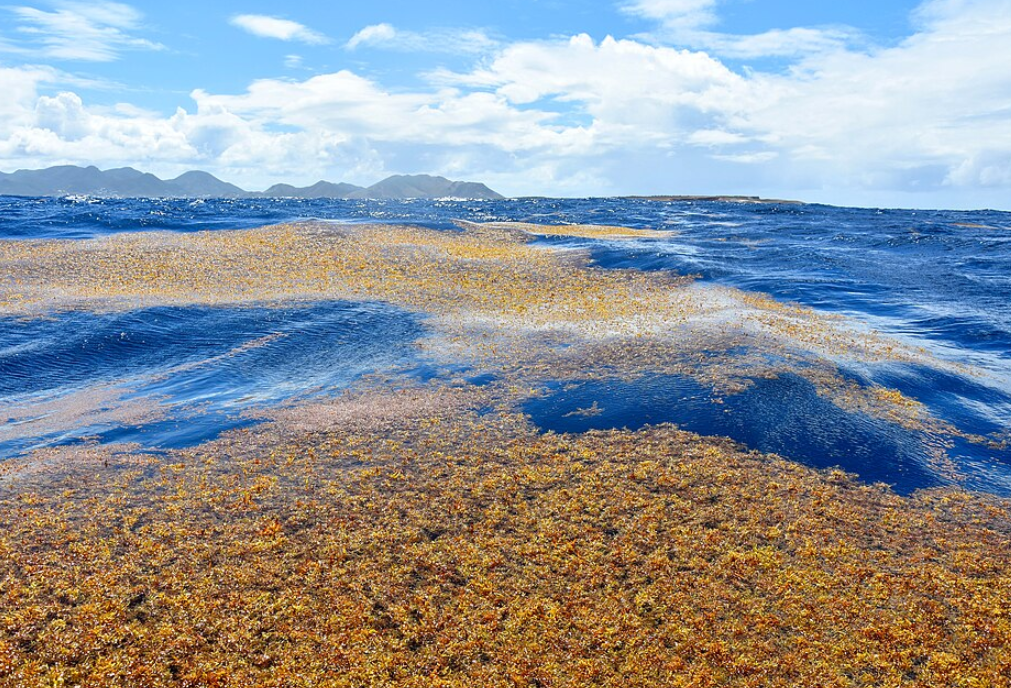
After sailing through the Gulfweed they reached the Azores, reprovisioning on the central island of Fayal before heading for the Bay of Biscay. The provisions included 30 gallons of ‘New Wine’ on which “…most of the crew imparted…” leaving the boys, Henry, James Anderson and Cornelius Mason, as the only ones sober enough to keep watch overnight during heavy winds. “…We steered her all night, running her off in puffs of wind til daylight…” when the crew “…began to shew some signs of life…” The consequences could have been disastrous but luckily the ship came to no harm.
Nearing the Bay of Biscay the masthead watch was discontinued and they threw the copper try-works overboard. This was often done to enable the deck to be cleaned and to reduce weight on the voyage home. Reaching the Channel they were caught in a cold N.E. wind for three weeks. The sudden onset of cold weather was a shock to Henry who “…felt the need of shoes… not having worn any for quite 4 years…” Having outgrown his own pair he tried the ship’s slop locker where he found a pair that just about fit him. The wind eventually changed direction and soon they saw the Owers Lightship just past Eastbourne and about 90 miles from the Downs and home.
William Bowles, a pilot from Deal, was taken out of a pilot cutter at Dungeness. After so long away at sea and so near to home, Henry had hoped to leave the ship when nearing Deal. The Captain refused, which Henry felt aggrieved by. To be fair to the Captain, though, he had been told of his father’s death, so wanted to keep him on board until he had heard from his family, which he did the very next day. There is no mention of how he took this unexpected and tragic news.
Overall Henry must have impressed Captain Hammer as, before sailing up to London and while anchored off Margate, Henry agreed that he would sail with Captain Hammer again as boatsteerer. So, with his next voyage almost guaranteed, Henry almost patiently waited in London for his wages. His wages of £30 felt like a vast sum to him, and before making for home he “..rigged myself out in a new suit of blue…” Home was reached not by sea but by train to Dover and from there he took the Fly to Deal, getting more and more excited as he neared home.
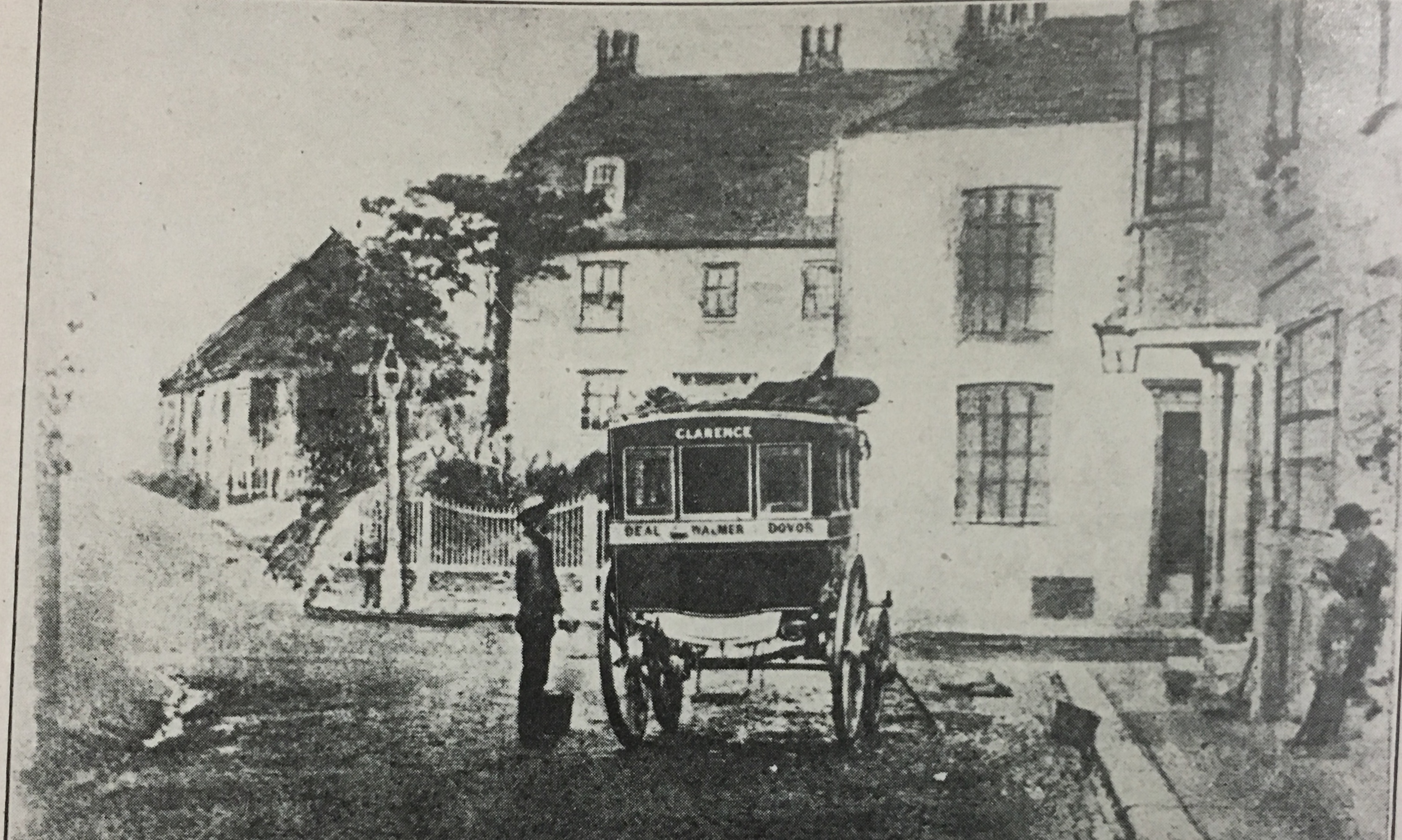
Prospect House and garden with the boat-builders shed behind.
from Reminiscenses of Old Deal
Alighting, probably in South Street, he walked towards home with the realisation that, after four years away, he was no longer a child, and no one recognised him. Reaching home, he “…peeped in the shop window…” through which he saw his sister Amelia, now like him a lot taller. After quietly entering the shop to surprise her, the sounds of their reunion brought the other members of the family rushing down the stairs to greet him. Henry does not mention anything of his father’s sad demise or the financial circumstances that he had left his family in, but he wrote in ‘Reminicenses…’ “…I shall never forget, it was well worth going on such a trip to receive such a welcome and how glad I felt afterward that I had not squandered my earnings in London, when I found I could help those who had such real affection for me with it…”
Finding that he could not wear his shoes for too long at a time, Henry spent most of his first week at home. After four years working barefoot, the discomfort of shoes is no surprise. One day he walked the 18 miles to Canterbury with “…due care…” as, for most of the way there and back, he carried his shoes.
He’d arranged with Captain Hammer that he would stay at home in Deal until he sent for him, but sadly, after three weeks, news reached Henry of his death.