Follow us on Facebook @FHofDW
Henry Foster
Reminicenses of a Sailors Life
Part 5
Boatsteer on the Collier Poulton
Making no mention of his feelings about the news of his captain’s death, and the loss of the planned employment as a boatsteer, Henry simply resolves to see as much of the world as possible. Something his mother, though no doubt she missed and feared for her son, never dissuaded him from doing.
One of the surprises of his return was the courtship of his sisters and especially of the man paying court to Milly (Amelia). This young man Henry describes as one of his boyhood enemies, who had once severely thrashed him. This young man, though, seemed to have forgotten this and as Milly was very fond of him it was not mentioned. The other sisters were also courting, so during Henry’s time at home there was plenty of company.
Henry’s elder brother, William, who had returned home and left again during Henry’s time on Sussex, had found employment in Bombay. Writing that this rather appealed to him, he continues to say that, young as he was, he had in his words “…seen one I could not easily forget, the one who is now my wife, and as dear to me as ever…” Determined to make her acquaintance and his feelings known, and with Milly as his confidante, she soon arranged a meeting. Not long after, “…mutual promises were made…” Ones that, as we shall see, were not broken.
Perhaps with thoughts of Mary in mind, Henry decided to look for work with the coastal trade. The first he found was a collier called the Poulton, from Arbroath bound for Southampton with paving stone.
Benjamin, Henry’s younger brother went on board with Henry before he sailed and saw with “…disgust the Hole, generally called the Forecastle…” in which Henry was to live during the voyage to Southampton. Life at sea was obviously not for him.
The morning after Benjamin’s shipboard visit, Poulton was underway heading for Southampton, a place of “…impressive appearance…” After unloading the paving stone they headed for Lymington to take on a cargo of oak timber for Arbroath. Lymington as a town did not impress Henry, who described it as a “…terrible Muddy Hole (sic)…”
It was not unusual at this time for the Captain’s wife to accompany her husband on voyages. Indeed, on some vessels they lived onboard and brought up a family. On this voyage, Mrs Scott had accompanied her husband and son, who was the ship’s mate. Henry writes that she was to stay onboard and be put off in Arbroath, but bad weather prevented this, so she left the vessel when they were towed into Berwick where they awaited a fair wind.
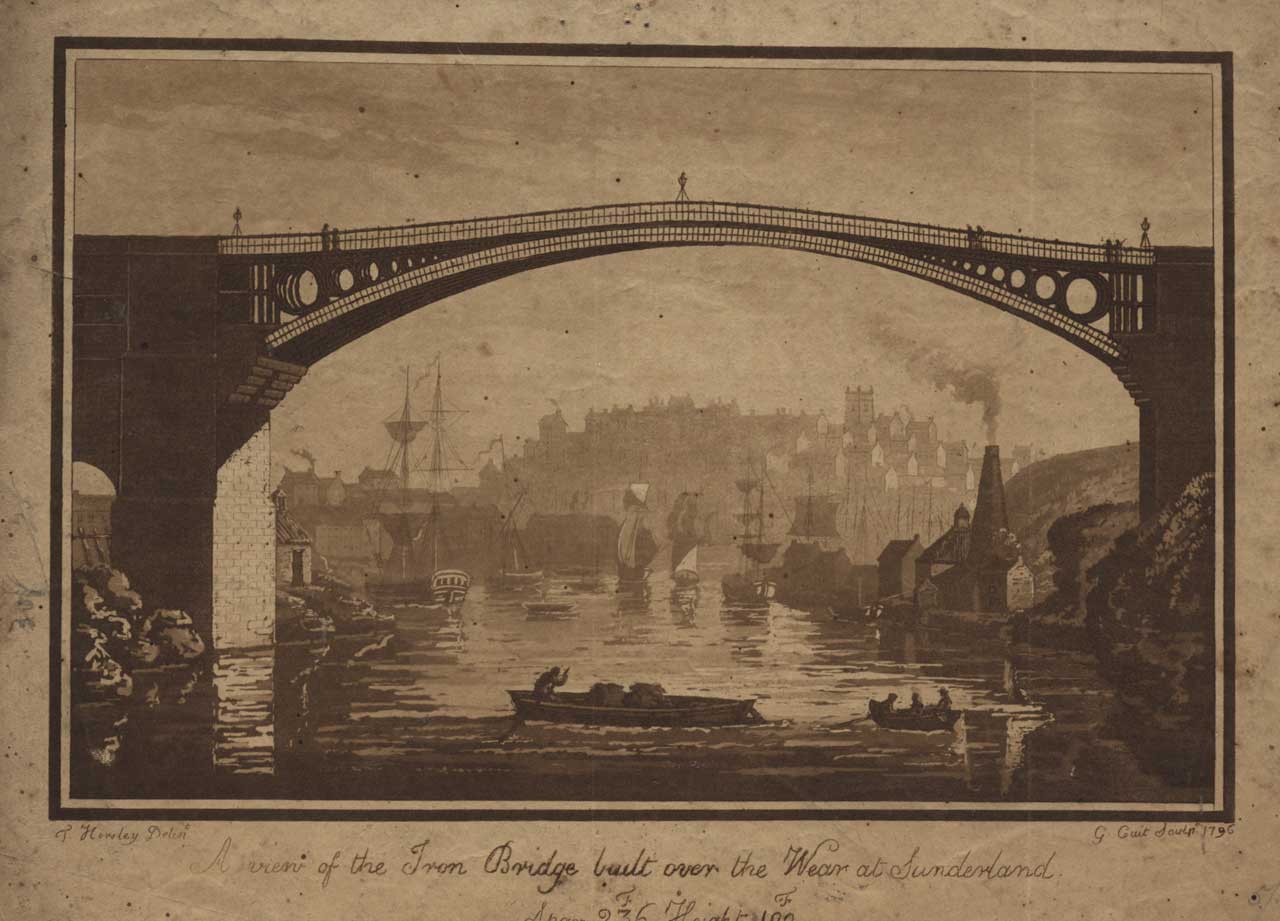
First Sunderland Bridge completed in 1796 by Thomas Paine. Painting by an unknown artist from 1796
Henry had never been to Scotland before and he writes, rather honestly, that he was prejudiced against it, but did not say why; however, his visit to Arbroath changed that. He mentions the Abbey which was “…thought a good deal of by Antiquarians…”
After Poulton had taken on thirty tons or so of ballast, they headed for Sunderland. Before entering the harbour, Henry had a “..bash at heaving ballast…” which was to be replaced with coal for Southampton. This was, he said, no joke. With coal on board, they were towed up the river, passing under “…the famed iron bridge which spans the river by a single arch…” This was Wearmouth Bridge.
The coastal trade was totally different from what Henry had experienced before and left him longing for ‘foreign trade’ and determined to seek a position where he could. Captain Scott, like Captain Hammer, took to young Henry and offered him the position of mate as his son was leaving him. Henry though declined and completed his voyage, leaving Poulton at Southampton from where he returned to Deal, though how he does not say.
Second Mate on the Barque Ann
Not long after his return he was offered a position of 2nd mate on the barque Ann bound for Calcutta with its passengers. Henry writes that a Mr Spain who was a ‘Deal man’ was part owner and the three midshipmen were Ed. Spain, C. Mourilyan and J. Rabbeth. These were possibly Edward Spain and Charles Mourilyan from Deal, and John Rabbeth from Dover. The rest of the crew were from Manila. The first mate, whom Henry does not name, was a Dutchman who sadly died of cholera shortly after reaching Calcutta. The Dutchman was apparently a good seaman but “… in general information very ignorant…” On finding out that sometimes his observations were incorrect they were sent down to Henry to work out and he became jealous and made life uncomfortable. So Henry decided that if this continued he would leave Ann on reaching Calcutta.
They left the Downs on Christmas Day 1844; after being at sea for a few days a brig showing Prussian colours approached them, apparently wishing to speak to them. What was communicated, apart from that they were heading for South America, Henry does not say but they soon sailed ahead of them under a short sail on Ann’s weather bow which “…made us rather suspicious about who he was. We accordingly got all our arms ready…” The Prussian brig then tacked in front of the Ann who responded with a musket shot across the brig’s stern. After that they saw no more of him, leaving all those on Ann relieved and bemused by the brig’s actions.
When off the Cape of Good Hope they lost a man overboard. He had followed Henry out to stow the jib in a heavy squall when he was washed over head first. He surfaced and a rope was thrown to him but he could not reach it, another was thrown, then another; lifebuoys were then thrown but he missed them all. The squall causing such a heavy sea meant the Captain would not let them lower the boat to try and rescue him. Henry had got into the boat ready to be lowered, not realising its poor condition. Perhaps the Captain knew this as, when they lowered it a few days later, it filled with water. So, Henry yet again avoided losing his life, but they had “…to leave the poor fellow to his fate…” What the passengers felt about this tragic loss Henry does not record, but he does
remark that merchant ships at the time were very careless over the small boats that were there to save people. Had it been a whaler, he says, the man would have been saved!
On reaching Ceylon (now Sri Lanka), they saw hundreds of sperm whales. At Puducherry, near Madras, they took on provisions then proceeded north, taking on a pilot to guide them into Calcutta. “…It certainly is a splendid-looking place…” writes Henry, “…worthy of the name City of Palaces…”
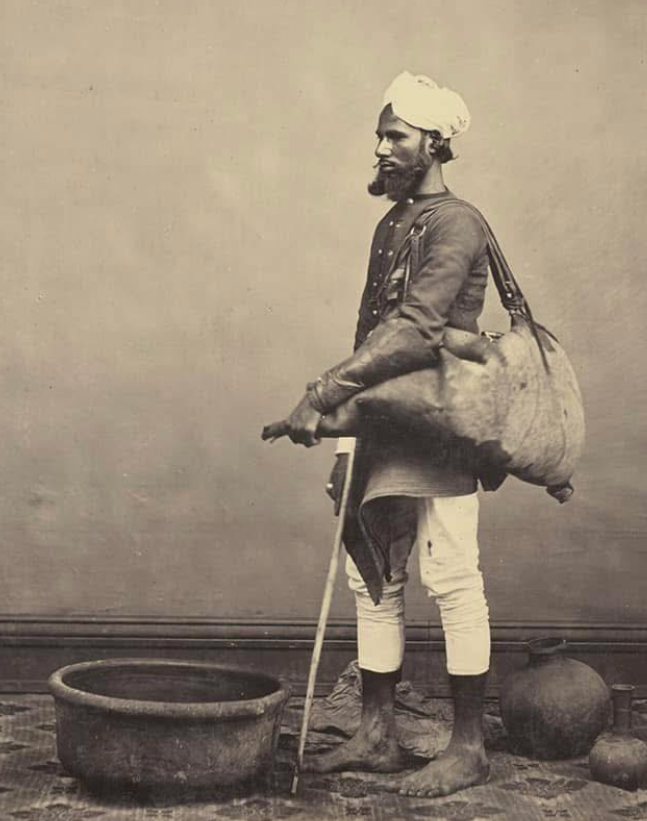
A ‘Bishti’ with his leather bag
The relationship with the Dutchman had not improved, so the Captain, understanding this, said he would look out for a berth for him. Henry left the ship and made his way to the sailors’ home “… to be in readiness whenever I was sent for …” The board and lodgings were very reasonable, at 3 ½ rupees a week, which included three meals a day, with morning coffee served at 6 am, which Henry enjoyed. He paid for a ‘Beesty Wallah’ to bring him water every morning, which he would pour all over himself in the bathing house in the yard. The ‘Bishti’ were traditional water carriers whose leather bags could carry 20 to 30 gallons.
In the month that it took for a berth to be found, Henry explored the city. In Black Town’s ‘Thieving Bazaar’, which he describes as being like London’s Petticoat Lane where all manner of stolen goods were bought and sold, he bought silk handkerchiefs.
As he experienced the heat of India, he made use of both Palkee carriers and Umbrella Wallahs. The latter cost less than half a penny and took you a considerable distance. Henry describes the wooden sliding doors and glass windows of the Palkee, which was carried by four men with a pole on their shoulders, stopping every five minutes to swap shoulders. At a cost of a rupee, it was “… for speed and care of your person it is a very pleasant ride…”

Palkee and Carriers
The castes and religions of the people are ‘innumerable’ and he describes the ‘Pariahs’ “…who are the only people in the country who have nothing to lose…” Henry describes an incident that he observed in 1845 when he was employed in Calcutta as a Quartermaster for the Peninsular and Oriental Steam Navigation Company. One morning eighteen bodies were found caught in the paddle steamer’s wheels. Naturally, Henry requested that the bodies be cleared away, but the locals refused as “…touching a dead body would involve the loss of caste…” In due course, one of the locals fetched a “…little Pariah girl, who went into the wheel with a bamboo stick and turned the bodies adrift…” The river was sacred and many different castes used it to ‘bury’ their dead. Henry writes “…it is a disgusting sight to see a corpse go floating past with the birds of prey settling on them, tearing the flesh from the bones…”
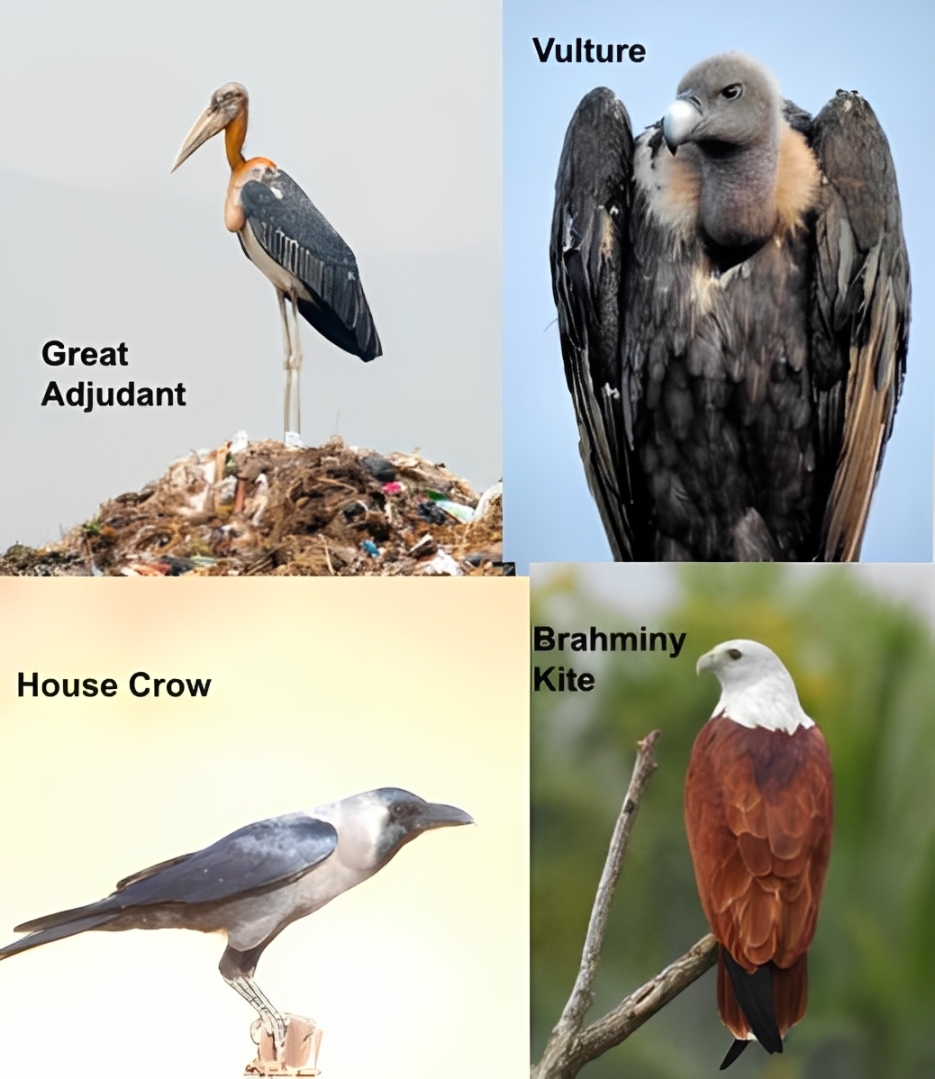
Just as in earlier wildlife sightings, Henry describes these birds of prey too, saying that the city was swarming with four types and it was against the law to touch them. There are disgusting-looking Vultures, Brown Kites (possibly Brahminy Kites) and scavenging Carrion Crows (possibly Indian House Crows). The largest and most formidable-looking birds are the Greater Adjudants, who sit on top of the highest buildings and often look like statues, but now inhabit rubbish dumps. Henry apparently had once seen one of these birds swallow a pig’s head, in one ‘gulp’.
The buildings of the city, as always, are not ignored by Henry. Government House, with its large green lawn, extends out of the city by about two miles. Fort William stands here with a fine hospital at the end of the lawn. Henry once had cause to visit the hospital when he was suffering from a fever, testifying to it being well used, saying, “… I think I would keep on for months describing the different services I saw …”
 Henry writes again of religion, remarking on the many religions of India and how observant the people were. At times he had seen them break off work on a vessel and go to a conspicuous part of the boat and start praying with their heads to the deck and “…go through all manner of genuflections; at any rate, they are not ashamed of their religion…” which Henry thought to be full of superstitions but remarked, “…what a lesson it teaches or ought to teach us, who have the light of the Gospel…”
He went on: “There is one thing I must mention that if our Government, which pretends to embrace them all as British Subjects, had treated them as such instead of pandering to the support heathen temples, and at the same time preaching christianity how they must have despised us in their hearts then never would have been the terrible Victory of 1857, talk about slavery and forcing other countries to put it down , while just as bad if not a worse slavery existed in our own dominions , it seems to me a very a very striking illustration of the ‘Mote and the Beam’ if not worse I have seen European children of 12 or 14 abusing the Natives and calling them such names as I should be ashamed to put them on these pages as well as being most offensive to religious feelings . I would not in any way justify the awful atrocities committed by the infatuated Sepoys but I was no more than cause and effect . I believe I have the opinion in common with many thousands of people who have been to India…”
The Victory of 1857 he writes of was the Indian Rebellion, also described as the Sepoy or Indian Mutiny. There appear to have been numerous factors that built up over a number of years that caused the rebellion. Poor wages, lack of promotion, the terms of military service and pensions, and the increased cultural and racial insensitivity from British officers all contributed to the feelings of discontent among the Indian soldiers of the Bengal Army. Added to which, in the 1840s there were attempts to extend recruitment to lower-caste Hindus, Sikhs and Muslims, which the high-caste Hindu sepoys saw as a threat to the traditional social hierarchy. In 1853, the Pattern 1853 Enfield rifle was introduced and rumours quickly spread that the cartridges for the new rifle were greased with pig and cow fat, making them offensive to both Muslims and Hindus.
In April 1857, 85 sepoys refused to use the new cartridges. These men were court-martialled and imprisoned. When sentenced, they were stripped of their uniforms and shackled by the ankles in front of 4,000 other sepoys. Shocked by this humiliating scene, the sepoys mutinied, quickly overwhelmed the British and released their fellow sepoys. The sepoys then began to shoot every British man, woman and child in sight. The British troops eventually regained control and executed thousands of sepoys and other Indians.
After about a month of waiting in Calcutta, Henry fell ill. He had crossed the river with a companion but could not find a boat to take them back. So they slept on the banks of the river, where he was woken by the howls of jackals. On waking, they both found they had caught a fever and, after crossing the river again, they took Palkees to the hospital. When he came to his senses, he found he was in the next bed to Mr Paterson, the second mate of the Sussex. Once they both had recovered, they went back to the Sailors’ Home together and a few days later Henry found out that Captain Baker, one of the passengers who had travelled to Calcutta on the Ann, had been appointed as Commander of the Peninsular and Oriental steamer lying in Garden Reach, a neighbourhood of Calcutta. After paying him a visit, Henry was appointed its Quartermaster. It was during this appointment that Henry had to deal with the eighteen dead bodies caught in the steamer’s wheel.
This steamer Henry described as a poor standby boat, which he had to keep clean and painted with the aid of thirty Lascars.
On making a trial voyage to Madras the boiler burst! So, Henry once again returned to the Seamen’s Home and waited for another berth. During which time he tried to get to Bombay to see his brother but it was not to be, and after a month Henry found a berth on the barque Johanna bound for Mauritius and on to London. Henry, having not fully recovered from the fever, relapsed into his illness causing him to shake. So with his ‘chum’ T. Cullin from the Isle of Man they left the ship at Port Louis. Rather than going to the hospital in this unknown port he decided to ‘doctor’ himself, though he does not say what treatments he decided upon, only that he was soon well. The pair soon found they were out of money having paid a guinea a week for board and lodging at the sailors’ home, which he describes as rat and bug infested. Their diet there was limited to ‘bullocks’ livers and hearts’ as meat was 2s 6d a pound. When Page, the landlord, found out they had no money he stopped their food, but rather than turn them out he allowed them to sleep in the home with their best clothes as a guarantee. The pair gradually sold off their remaining clothes and with the proceeds went to a Chinaman’s shop to get a bottle of beer and some bread. Aware of their appearance, they went out into the country to wash themselves and their clothes in a spring, after which they lay on the grass while their clothes dried. Nearby was a mango grove so they ‘feasted on them’.
Henry doesn’t miss the opportunity to take in, and later write about, the scenery, describing the Pieter Both, sometimes referred to as Peter Botte Mountain. “…It is very difficult to climb there being a summit, about 50 feet in height, very similar to a human head …”
While recovering, Henry would often wander around the harbour, casting envious glances at the lascars and coolies who were strong enough to lift the heavy bags of sugar. Once fit enough, he and his ‘chum’ returned to the harbour to try to find work. Despite their very poor appearance, they almost immediately found employment. A mate, from a newly arrived French brig, was looking for hands “..to unmoor the vessel and warp her up into the Canash, as the river harbour was called…” The brig had been condemned, so the two helped take down the ship’s rigging. This earned them a day’s pay and some ‘grub’; and proving that he was a good worker, Henry continued to easily find work to support himself. After a matter of months, he grew tired of that way of life and, on finding a berth on the William Peile, a barque from Workington bound for Cork,. Henry was once again back at sea. After ninety days at sea,they put in for water, at St. Helena, with great difficulty due to the winds.
It was while Henry was at the wheel that the Captain struck him and, very much against his nature, “…in a fit of passion…” he returned the blow. The Captain then grasped hold of Henry who thought, in that moment, he would be thrown overboard. Luckily for him, the second mate came to his rescue and the Captain let him go. What happened after this Henry does not say, but on arriving at Cork, the William Peile was ordered to Liverpool, which “…considerably elated all on board…” not least Henry. Four days later, they were safely moored in Princes Dock.
One of the apprentices, John Garry, who later became a Captain and a part owner of a China Clipper, befriended Henry and showed him around the city. Going out of the dock gate, Henry spied a young mate he knew from Dover, named John Pembroke. Being a proud young man and not wishing him to see the poor state that he was in, with no shoes or stockings, Henry ‘hid’ from him. Despite desperately wanting to see his family and his future wife, with little money in his pocket, his pride also prevented him from then returning home. After a couple of days, he found a brig, Countess of Zetland, bound for Croustad, (Kronstadt) an island off Russia in the Baltic, with a cargo of coal and cotton.
Passing through the Pentland Firth that separates mainland Scotland from the Orkneys and out into the German Sea (North Sea) and onwards to Elsinor (Helsingør) where they cleared customs. Here they were presented with a bottle of vinegar, as was customary. Henry, writing this thirty or so years later, could not remember the reason behind this custom. After being cleared, they traveled on to their destination
“…A voyage up the Baltic is very pleasant in summer time…” writes Henry “…especially in the Northern parts of it where it is nearly all daylight…” After thirty days they reached Croustad passing through four forts “…quite detached from the shore and bristling with guns… ”
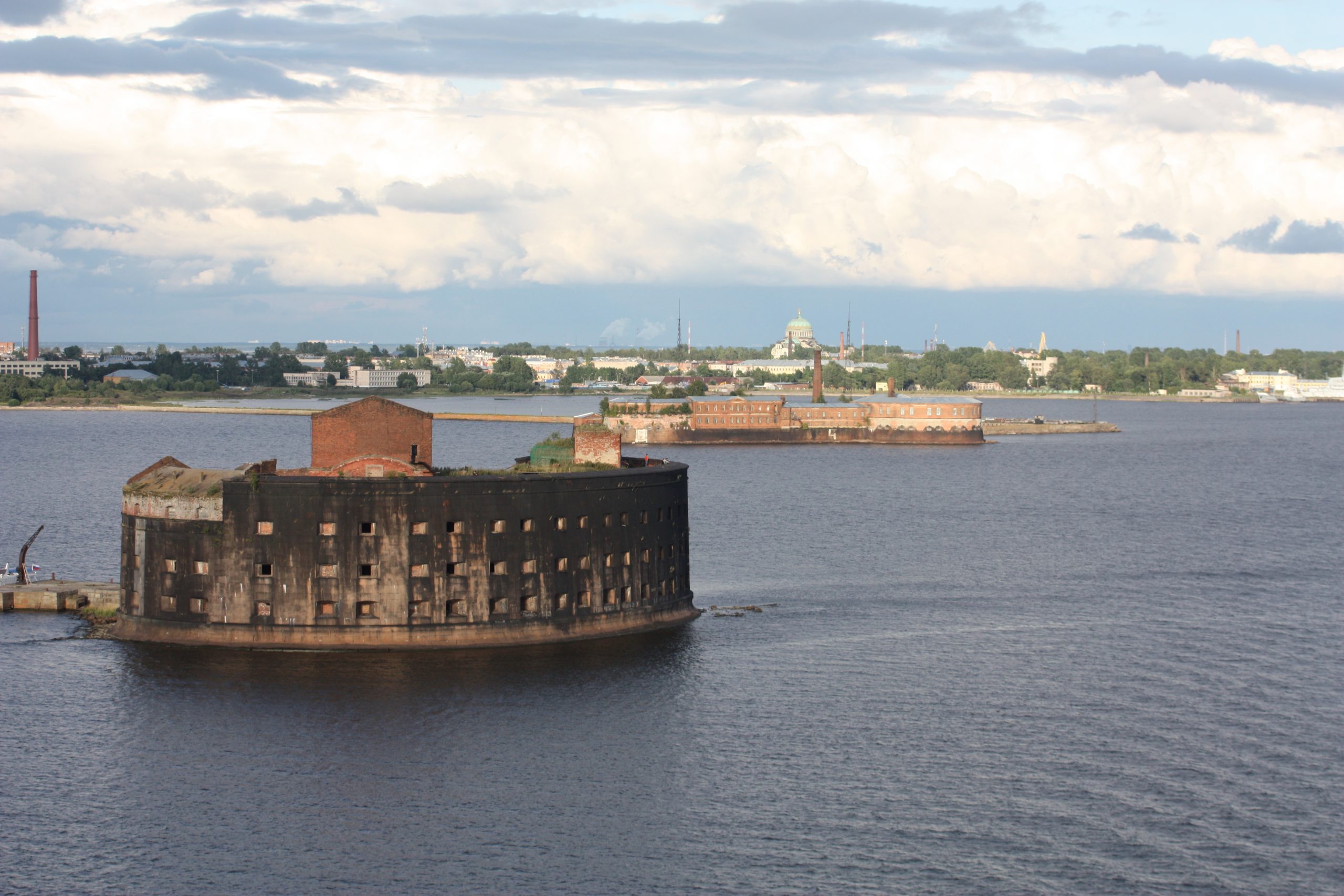
Two of the island fortresses with Croustad in the distance
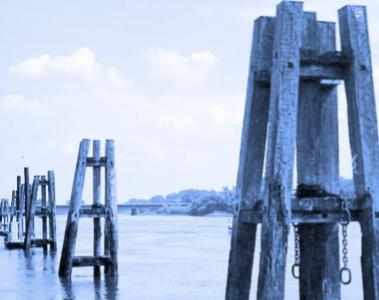
A dolphin is a group of pilings that serve as a protective hardpoint along a dock,and as a mooring point.
The Mole, spit or stone pier, at Croustad was at the time divided into two: one side for merchantmen, the other for men-of-war. Here there was a floating custom house and a cookhouse open to all. Each ship had the use of a little boat to convey the ship’s cook with his utensils and victuals at an allotted time. This arrangement Henry felt was due to the fact that many of the ships were full of combustibles such as hemp, tallow and coal. No smoking was allowed and fires were strictly prohibited; offenders were heavily fined.
The masonry on the Mole was being improved and the many vessels were moored in a line to dolphins with just enough room for each to get by. With hindsight Henry wondered if all this work was in preparation for the Crimean War seven years later.
The many men-of-war stationed at this important Russian naval base impressed Henry. The manner by which they arrived from St. Petersburg intrigued him. So, he was interested to find out that, as the water was very shallow there, they were transported from there by using camels. He is probably referring to external flotation tanks that are fitted to the ship to increase buoyancy.
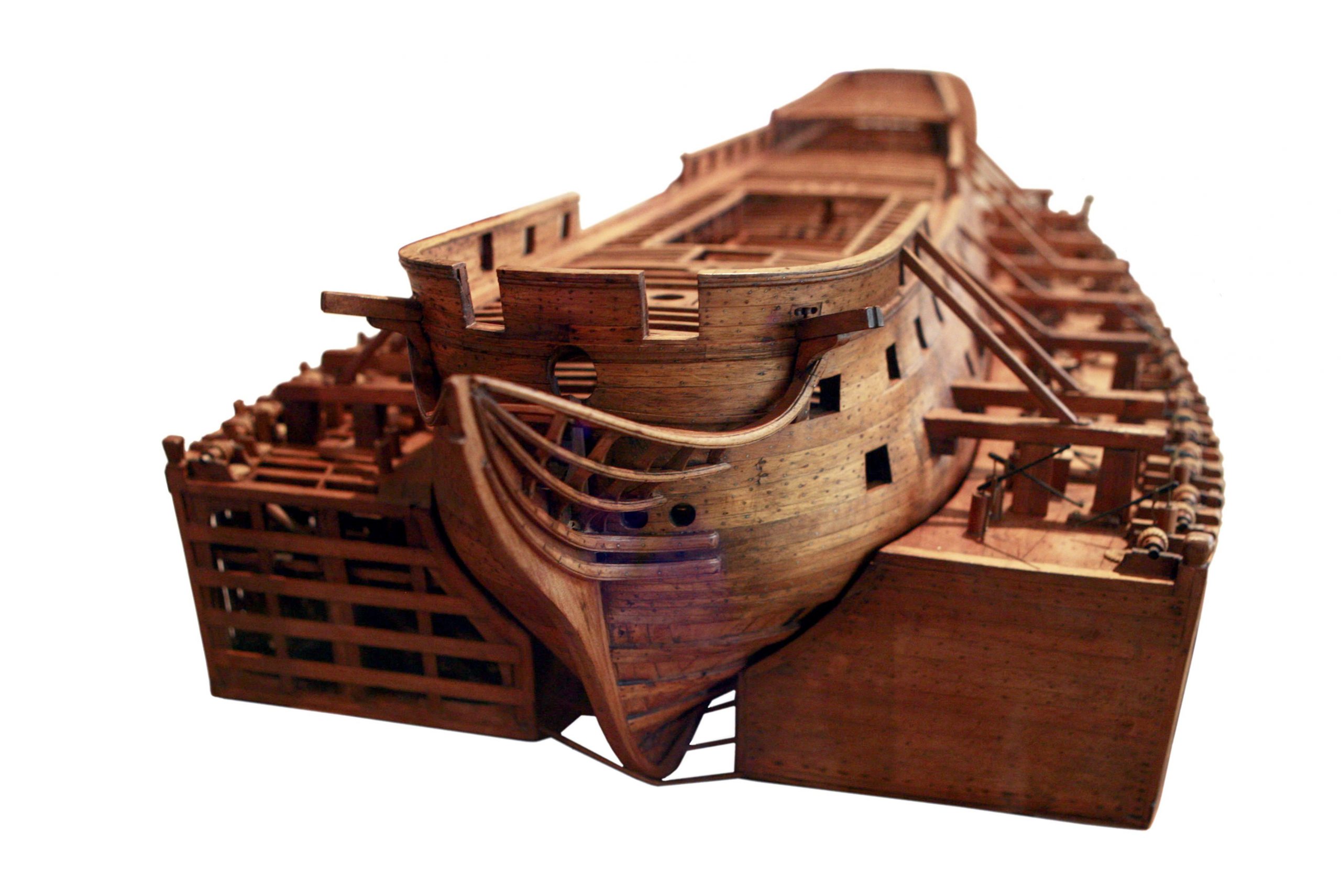
A ship camel
The town Henry writes is a clean and airy place with wide streets “…far better than any I have seen in England…” but writing decades after this visit he says “…England has improved in that particular since then…”
With their cargo of hemp and tallow stowed, they left for Liverpool, arriving in late August. However, Henry’s memory appears to be out by about a month, as he writes that before arriving in Liverpool they had to take shelter in Belfast Lough. Once the weather improved, they set sail again, and as they passed through Dundrum Bay, Henry was sent aloft, from where he spied the large steamship stranded at the head of the bay. This was the mail steamer SS Great Britain, which had run aground in September.
SS Great Britain
Launched in 1843, the SS Great Britain was designed by Isambard Kingdom Brunel. It was while on its fifth Atlantic crossing that it ran aground in Dundrum Bay when the captain had used a faulty chart. On September 23, Lloyd’s received a letter advising them of the grounding.

Image showing the protective timber Sun London 25 September 1846
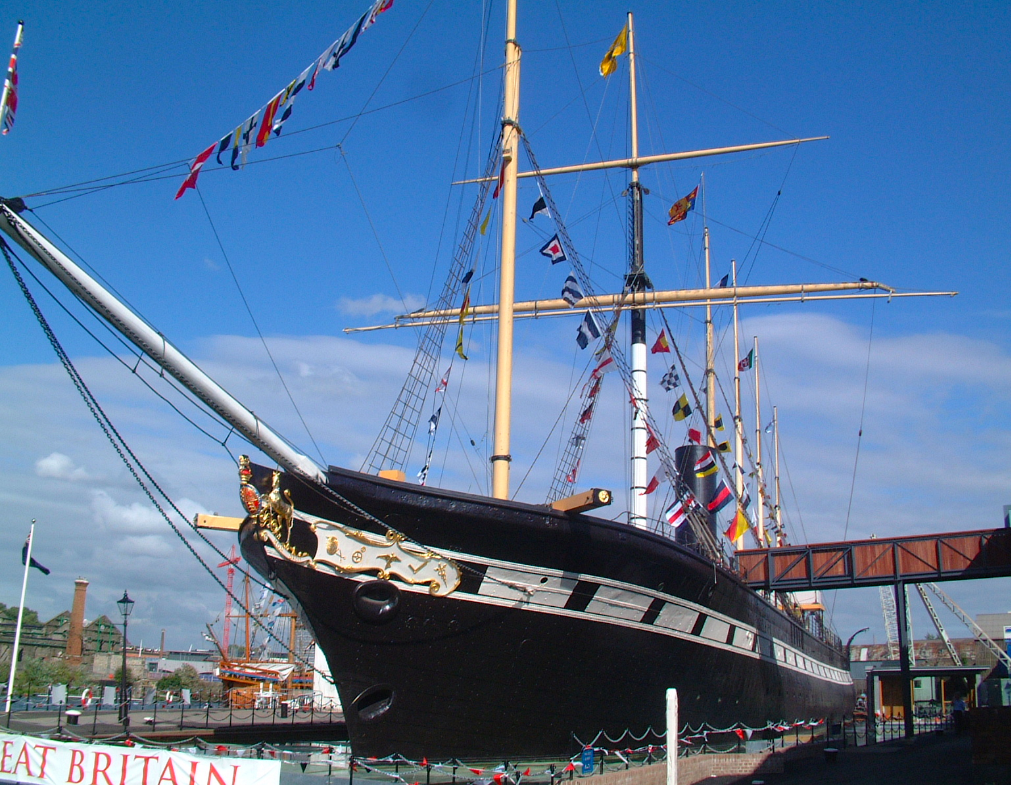
Restored SS Great Britain Mattbuck (CC BY-SA)
A wooden structure was built to protect the ship’s damaged hull from the sea, which took eleven months to repair. The total cost to refloat her was £34,000 (over $3 million today). This ship, after an eventful history including acting as a troop carrier during the Crimean War and carrying passengers to New York and later to Australia, was again wrecked off the Falkland Islands in 1886. Here, sitting just above the waterline, she was used as a coal bunker and wool store. In 1970, she was towed back to England on a giant barge and is now a tourist attraction in her original home of Bristol.
After arriving in Liverpool, Henry headed home, but he does not write about the few months that he spent with his family nor what time he spent with his future wife; but then, Henry’s ‘Reminicenses’ are about his seafaring life.
Benjamin Foster Dover Express 8 April 1881 Benjamin, his younger brother, wished to see London, so in December 1846 Henry wrote about their visit. They travelled from Herne Bay to London Bridge by steamer. They first went to Nicholson’s Wharf, where Henry was able to leave his chest and hammock while he looked for a berth. But first, Benjamin proposed that they should visit an old friend in Mile End who was a Customs Landing Waiter; his job was to supervise the unloading of imported goods and to examine them. When this unnamed friend realised that Henry was a seaman, he wanted to know all about his ‘nautical experiences,’ as he had a friend named William Hocker staying with him who had happened to have been given charge of a schooner named Enterprise. This proved beneficial to Henry as, soon after meeting, William Hocker offered the position of mate. While Enterprise was being loaded, Benjamin, with a map of London in his pocket, explored the city. In the evenings, he would tell his brother about each day’s ‘adventures.’How much longer Benjamin stayed in London is not mentioned, but in 1849 he emigrated to the USA. Having served his apprenticeship with Edward Hayward, Deal’s first newspaper proprietor, he set up in business as a printer in Peoria, Illinois. In 1856 he returned to England to marry Christiana Clark, sister to Mary Harvey Clark, in West Hackney, London, on 30 April 1856. Two months later the newlyweds, with Eliza Ann Foster, Benjamin’s youngest sister who had been a witness to the marriage, sailed for America on the SS American Congress. Benjamin and Christiana remained in Peoria raising their family until their deaths: Benjamin in 1881 and Christiana in 1924. Benjamin’s obituary tells us that, like his brother, he had strong lifelong religious convictions.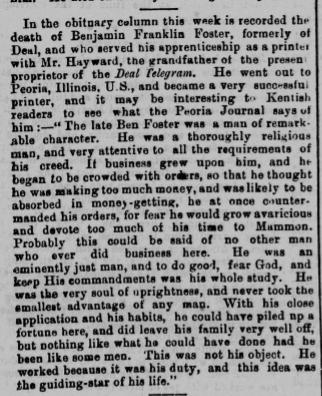
Enterprise
Leaving London Bridge, Enterprise headed to Erith where it took on 1,300 casks of gunpowder. Reaching Deal, they landed Mr Rees the Pilot and proceeded down the Channel. Despite the unpredictable nature of their cargo, there were seamen, one in particular who was repeatedly caught by Henry in the hold with lighted pipes!
Their first port of call was Athens with its beautiful natural harbour. “…what was most interesting to me was Mars Hill…” wrote Henry, “…and the Acropolis and the ruined temples scattered about…” The only ‘modern building’ worth a mention, he says, was built of white marble in the reign of King Otho. This must be the University of Athens, which was founded on 3 May 1837 by King Otto of Greece and was named in his honour the Othonian University. The city itself Henry describes as a “…very poor looking place very different to what it was in ancient times …”
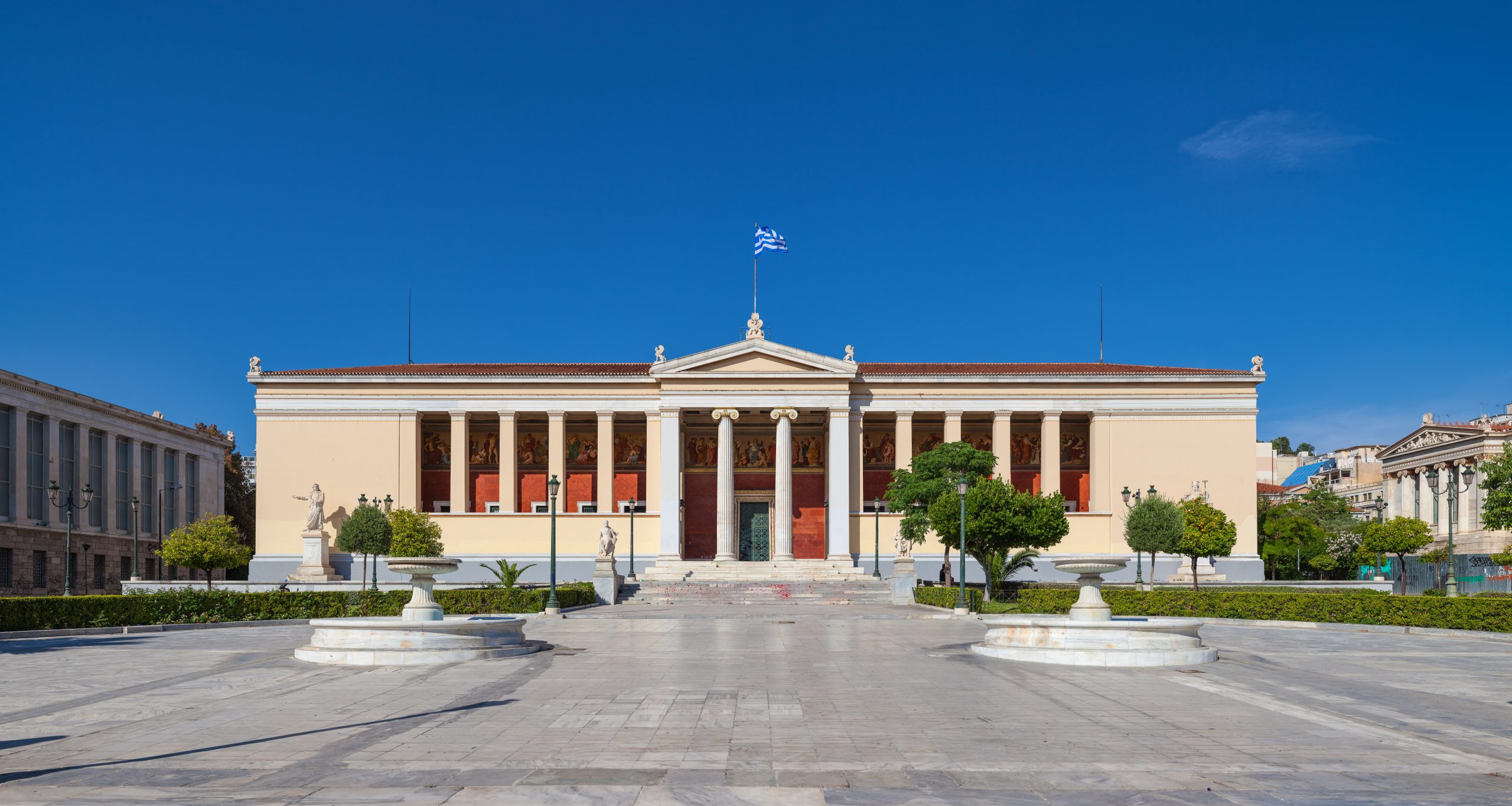
University of Athens Greece
Before entering Athens Harbour, for safety, they had to unload the gunpowder and reload it before proceeding on to the island of Syra (Syros), the major shipbuilding area of Greece, where they discharged the cables and anchors, then on to Smyrna (Izmir, Turkey) to discharge the remaining cargo. Smyrna city Henry describes as a “…very good type…” but notes that the fashions had not moved in 3,000 years. He also remarks how he thought Europeans made themselves look ridiculous, with their “…ever-changing fashions…” He remarks that although he didn’t believe in Quakerism, they at least dressed with the word of God in mind. “…in the matter of dress…” he said “… Christians might adorn the doctrine of Christ…”

Scala Nova
From Smyrna, they sailed around the coast to Ephesus where they took on ballast, here Henry visited Scala Nova with its Turks, Greeks “…and lots of Jews; how remarkable the scriptures are verified in that race. Who were really God’s chosen earthly people but now scattered expelled on account of their rejection of the Messaiah…” but with his ever present religious beliefs he says “…but of course the same way Salvation is open to them, as to any gentile…”
His thoughts turned to the Bible, to when the inhabitants “…were in heathen darkness as to the knowledge of God…” and the town clerk of Ephesus dismissed the ‘virtuous assembly’. Despite this, Henry recognised that they knew something of good governance, quoting from Corinthians, ‘The World of Wisdom Knows Not God.’
He also gives his opinion that those Christians of the day may think little of that Bible chapter as they try to set the world to rights, pointing out that the “…scripture positively declares in many places that things will get worse and worse and it is only the presence of the Holy Ghost that prevents the manifestation of evil…”
Leaving Ephesus they headed for Malaga but strong winds drove them back to Almeria Bay. Here they went ashore to take on water for which the Spaniards charged them $1 a cask. It took them four attempts to reach Malaga and ready themselves to get through the Gulf of Gibraltar “…a task of no little difficulty to keep in the eddy along the rocks…” Then on past Cape Trafalgar and Cape St Vincent, finally reaching Cork. With the Captain being unfamiliar with the port, Henry acted as Pilot. When the vessel grounded on a spit, it being low tide, the Captain went ashore leaving Henry under orders to get the vessel into a berth once the tide flowed. Soon afterwards they got orders to proceed to London where Henry was discharged. This was in around May 1847.
After a short visit home, Henry received a letter from Captain Hocker with a job offer from his brother, Nathaniel Hocker, who had purchased the schooner Fortune Teller which was lying in Newport Mon, Wales, with a cargo of coal for Gibraltar and Malta. Nathaniel Hocker had mainly been in the coastal trade so had little knowledge of the navigation required beyond those waters. As Henry was being offered slightly higher wages than before, he gladly took up the offer. At some point in his journey to meet with Fortune Teller he ‘fell in again’ with Cornelius Mason, his fellow apprentice from the Sussex Whaler. Henry approached Captain Hocker on Cornelius’s behalf and he was taken on as an Able Seaman. After a stormy voyage, they reached Gibraltar where they discharged their cargo of coal. While taking on ballast and several tons of coffee for Malta, Cornelius became ill and was admitted to hospital.
After several days the ship was ready to sail, at which point Henry sought out and was given permission to fetch Cornelius, provided that he would care for him on board. However, it was a Saturday and the fresh water they needed would not be available until Monday and, with the Captain very eager to leave, Henry said he’d be willing to take the risk with the water they had stored on board, which was stored in an old wine pipe. This turned out to be a major error of judgement as they were soon “… becalmed for about a week and our water completely spoiled, so that it was poisonous to drink…” The ten gallons of wine on board became their only drink ration but that would not have lasted them long, even when they got on the way again. Luckily for the crew, a schooner was spotted. It turned out to be the Chandos of Falmouth, the Captain of which was John Hocker, brother to Captains Nathaniel and William Hocker.
Captain John provided them with the water they required and Nathaniel took the opportunity, while it was being loaded, to visit his brother on Chandos. Word was soon sent for Henry to send over a few bottles of the remaining wine from the Captain’s cabin. Placing them on the cabin table for a boy to take on deck, one of the bottles exploded with such a loud report everyone thought a gun had been fired. The glass shattered into fine needle-point fragments covering the whole of the cabin. Henry mentions this as it seemed a most extraordinary occurrence. He also says that he “…left the glass sticking all over the cabin to convince the Captain as he was a most disagreeable fellow and most likely would have accused me of drinking the wine…” He goes on to describe this trip as “…the most wretched…” with the Captain not speaking for a week, then when he did, only to find fault.
After the life-saving water was stored, they made for Malta. After discharging their cargo, they had to wait for several weeks for a cargo to be ready to take back to England, during which time Henry got tired of Captain Nathaniel Hocker’s unpredictable temperament and asked to be discharged. At first he agreed but soon after, perhaps unsurprisingly, he changed his mind and persuaded Henry “… to stay and be friends…” Once at sea, his unpredictable nature returned. They rubbed along until the night before they reached Gibraltar. The Captain had been on deck at around 4 am, expecting to see Europa Point Lighthouse. On spotting a light, he called for Henry, who promptly realised that the light was not from Europa Point and if they stayed on their present course they would soon be ashore. Needless to say, the Captain persisted in his belief and ordered Henry not to alter course. Knowing the danger, once the Captain was off the deck, Henry altered course and then went aloft to have a look around and, in doing so, realised he had not altered course sufficiently. On deck again, he ordered all hands to him, including the Captain, “…to turn the yards and take in the studding sails…” When the Captain came on deck, he was far from convinced of his mistake, but it seems the incident changed his manner towards Henry for the better. He had, after all, prevented the ship from grounding.
From Gibraltar they proceeded to Fowey where Henry finally was able to leave, as did Cornelious Mason. From Fowey they made their way overland to Plymouth, probably taking the W. H. Hodges Omnibus. To their surprise the driver of the ‘bus’ was a “…gentile looking woman…but after hearing the woman’s voice all idea of refinement or gentility vanished, it was masculine in the extreme, and her expression not fit for ears polite…” On the road they passed her husband driving the opposite way and they stopped for a brief conversation before continuing on the road.
After spending the night in Plymouth they boarded a passenger steam packet for London. Mindful of their pockets they bought deck tickets. With a gale blowing they were glad to make friends with the Boatswain who lent them a small sail and they rigged up a small tent for themselves. There were three young women on deck who were travelling to London to take up ‘situations’, who could not afford a cabin so they “…gladly availed themselves of our protection our tent afforded during the 3 days…” On arriving in London Henry got home as soon as possible, though he does not mention where Cornelius went or what he did.
Henry doesn’t write about his time at home, only that after a couple of weeks he started to wonder what he should do. At which point an old gentleman visited him to tell him there was a position as mate available on the Mauney, a brig of Plymouth, being ‘redressed’ in Rotherhithe’s Bull Head Dock. However, after being given the position and living onboard for six weeks the vessel was sold. The owner, a Sicilian merchant, had died in Palermo in February 1846 and the executors of his will sold Mauney to a Mr Harvey of Littlehampton for £400; the shipwright’s bill exceeded the sale price and amounted to £600. Henry approached Mr Harvey asking for command of Mauney, but the position had already been promised to a friend of his. The best he could do was to bear Henry in mind and allow him to stay onboard until he could find either another berth or somewhere else to stay. The kindness was amply repaid as “…there was about £150 worth of stores lying about the dock not included in the inventory of stores and would have fallen into the hands of the dock people had it not been for me…”
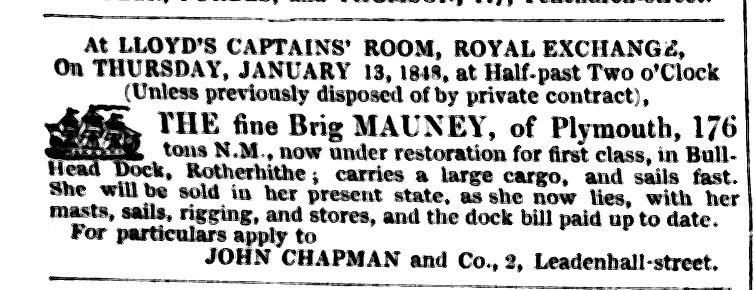
Shipping and Mercantile Gazette 10 January 1848